Hollandaise Sauce
Hollandaise is the fifth mother sauce, and the only one that isn’t built on a roux or a stock. It’s an emulsion of egg yolks and melted butter, held together by whisking and gentle heat. That’s what makes it different from the other four — and that’s why it breaks. Hollandaise doesn’t fail because you used the wrong flour or the wrong stock. It fails because you added the butter too fast, or let the eggs get too hot. Learn the temperature control, and the sauce is nearly foolproof. It takes about 20 minutes and four ingredients.
Makes: About 1 cup
Prep time: 5 minutes
Cook time: 15 minutes
Total time: 20 minutes
Difficulty: Medium
Cuisine: French
Category: Mother sauce
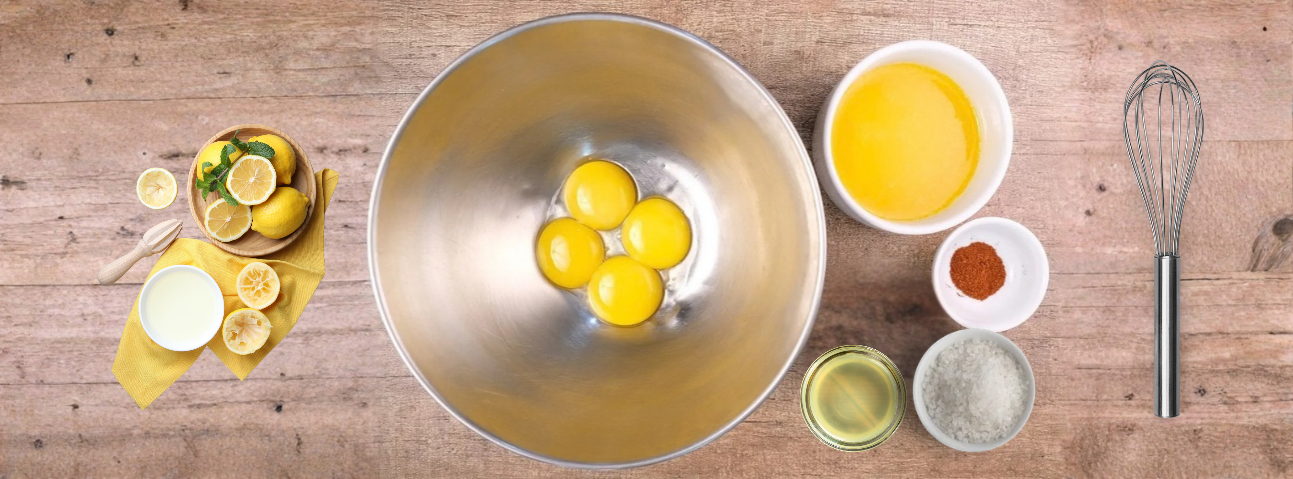
Table of Contents
ToggleIngredients
3 large egg yolks
1 tablespoon fresh lemon juice
1/2 cup (1 stick, 113 g) unsalted butter, melted and slightly cooled
1/8 teaspoon fine salt
A small pinch of cayenne pepper (optional)
1 tablespoon warm water, if needed to adjust the consistency
A note on the ingredients. Use fresh eggs — old eggs have weaker yolks that are harder to emulsify. Use unsalted butter so you control the salt. Use fresh lemon juice, not bottled. These three things make a difference you can taste.
Instructions
1. Melt the butter. Melt the butter gently in a small saucepan or in the microwave. Don’t let it get so hot that it spits or smokes. Let it cool slightly — the butter should be warm, not hot, around 120–130°F (49–54°C) when you start adding it to the yolks.
Chef’s note: If you don’t have a thermometer, the butter should feel warm on your fingertip but not hot enough to make you pull your hand away. Hot butter cooks the eggs on contact. Warm butter emulsifies.
2. Set up the double boiler. Fill a saucepan with 1–2 inches of water and bring it to a gentle simmer — small bubbles, not a boil. Place a heatproof bowl over the saucepan. The bottom of the bowl should not touch the water.
Chef’s note: If the bowl touches the water, the eggs get too hot and scramble. The steam alone should provide the heat.
3. Whisk the yolks. Put the 3 egg yolks and 1 tablespoon of lemon juice in the bowl. Whisk continuously for 1–2 minutes, until the yolks lighten in color and start to thicken.
Chef’s note: If the bowl feels too hot to touch, lift it off the saucepan for a few seconds while you keep whisking. The heat is there to warm the yolks, not to cook them.
4. Add the butter — slowly. This is the step that matters. Start adding the warm melted butter in a very thin stream while whisking constantly. Add a few drops at first. Once the sauce starts to thicken and look creamy, you can pour the butter in a slightly faster, steady stream.
Chef’s note: Adding butter too fast is the most common reason hollandaise breaks. The emulsion has to form slowly. If the sauce looks like it’s about to separate, stop adding butter and whisk what’s there for 10–15 seconds before continuing.
5. Season. Add salt and a small pinch of cayenne if you want heat. Taste. If it’s too rich, add a few drops of lemon juice. If it needs more flavor, add a little more salt.
6. Adjust the thickness. Hollandaise should coat the back of a spoon but still pour. If it’s too thick, whisk in warm water one teaspoon at a time. Don’t add a lot at once.
7. Serve immediately. Remove the bowl from the heat. Give the sauce one final whisk. Serve warm.
Why It Breaks (And How to Fix It)
Hollandaise is an emulsion. Egg yolks contain lecithin, which acts as an emulsifier — it holds the butter and lemon juice together in a smooth sauce. But the emulsion is fragile.
Two things break it:
Heat too high. If the yolks get too hot, they cook — and once they cook, they can’t emulsify. This is why the bowl shouldn’t touch the water and why you lift the bowl off if it feels too hot.
Butter added too fast. If the butter goes in faster than the yolks can absorb it, the emulsion can’t form and the sauce splits. This is why the first few drops matter — they set up the emulsion that the rest of the butter will join.
Fixing a Broken Hollandaise
If it’s just starting to separate — remove the bowl from the heat. Add 1 teaspoon of warm water and whisk hard. That’s often enough to bring it back.
If it’s fully broken — start a fresh yolk in a clean bowl. Whisk it over gentle heat. Then slowly add the broken sauce to the fresh yolk while whisking. The fresh yolk provides new emulsifier and the sauce comes back together.
Don’t throw it out. Broken hollandaise is almost always recoverable. The exception is scrambled yolks — if you can see pieces of cooked egg in the sauce, you can’t bring that back. Strain it and start over.
Making It Without a Double Boiler
You don’t need a double boiler. You need a heatproof bowl that fits over a saucepan. A metal mixing bowl works, or any bowl that sits on the rim of the pot without touching the water.
You can also make hollandaise in a blender. Warm the egg yolks and lemon juice briefly in the blender, then drizzle in the warm butter with the blender running on low. It works, but the texture is slightly different — a bit looser than the classical version.
Chef’s note: In a professional kitchen, we used the bowl-and-saucepan method. It’s more control, less cleanup, and the texture is what people expect from hollandaise.
What Makes It a Mother Sauce
Hollandaise is one of the five mother sauces in classical French cooking. It’s the base for:
Béarnaise — hollandaise with shallots, tarragon, and vinegar reduction
Sauce mousseline — hollandaise with whipped cream folded in
Sauce maltaise — hollandaise with blood orange juice and zest
Sauce noisette — hollandaise with browned butter
Sauce mikado — hollandaise with orange juice and zest
Each is hollandaise plus one or two things, whisked in at the end.
What You Can Serve It With
Hollandaise is most famous for eggs Benedict, but it’s not just a breakfast sauce.
Eggs — Benedict, poached, scrambled, soft-boiled
Vegetables — asparagus, broccoli, green beans, cauliflower, roasted potatoes
Fish and seafood — salmon, cod, halibut, shrimp
Meat and chicken — grilled chicken, steak, roasted beef
A small amount is usually enough. Hollandaise is rich — the flavor carries.
Recipe Notes
Using a blender. Warm the yolks and lemon juice in a blender for 30 seconds on low, then stream in the warm butter with the blender running. The result is slightly looser than the classical version but still good.
Making it ahead. Hollandaise is best served fresh. If you have to hold it, keep the bowl over warm water — not hot — and whisk every few minutes. Don’t put it in the fridge and reheat it if you can avoid it; the texture suffers.
Reheating. If you must reheat, place the sauce in a heatproof bowl over warm water and whisk slowly. Add a splash of warm water if it’s too thick. Don’t heat it directly in a pan.
Fixing a too-thick sauce. Whisk in warm water one teaspoon at a time until it reaches the right consistency.
Fixing a too-thin sauce. Continue whisking over gentle heat. The sauce will thicken as the yolks cook slightly. If it stays thin, you may not have enough yolk — start over with an extra yolk in a clean bowl and whisk the thin sauce into it.
Serving with fish or meat. A small amount is enough. Hollandaise is rich — it’s meant to be a finishing sauce, not a base.
Storage
Fridge: Up to 2 days in an airtight container.
Freezer: Not recommended. The emulsion breaks when it freezes.
Reheating: Gentle heat only, over warm water, whisking slowly.
Because hollandaise contains raw egg yolks and butter, don’t leave it at room temperature for more than an hour. If you’re serving it at a brunch, keep the bowl over warm water on the table.
The Takeaway
Hollandaise is the fifth mother sauce, and the only one that’s an emulsion. It’s not thickened with roux or stock — it’s thickened with egg yolks and butter, held together by whisking.
The technique is the whole recipe. Warm butter, gentle heat, slow addition, constant whisking. Get those four things right and you have a sauce that turns eggs, vegetables, and fish into something worth remembering.
Get them wrong and it breaks — but broken hollandaise is almost always fixable. Learn the fix and you’ve learned the sauce.