
Béchamel Sauce
Béchamel is milk thickened with a roux of butter and flour. It’s one of the five mother sauces of French cooking — and the base for mac and cheese, lasagna, gratins, and a dozen other dishes you’ve probably already made. It takes fifteen minutes and three ingredients.
Makes: About 2 cups
Prep time: 5 minutes
Cook time: 10–15 minutes
Total time: 15–20 minutes
Difficulty: Easy
Cuisine: French
Category: Mother sauce
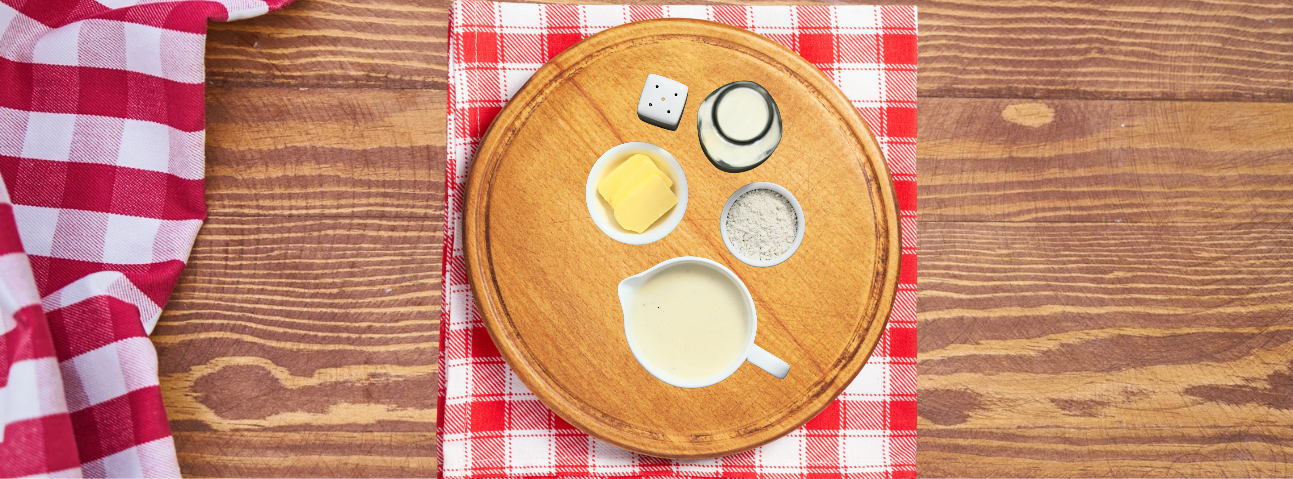
Table of Contents
ToggleIngredients
2 cups whole milk
4 tablespoons unsalted butter
4 tablespoons all-purpose flour
1/2 teaspoon fine salt
1/4 teaspoon white pepper
A pinch of freshly grated nutmeg
Instructions
1. Melt the butter. In a heavy-bottomed saucepan, melt the butter over low heat. Don’t let it brown — you want it just melted.
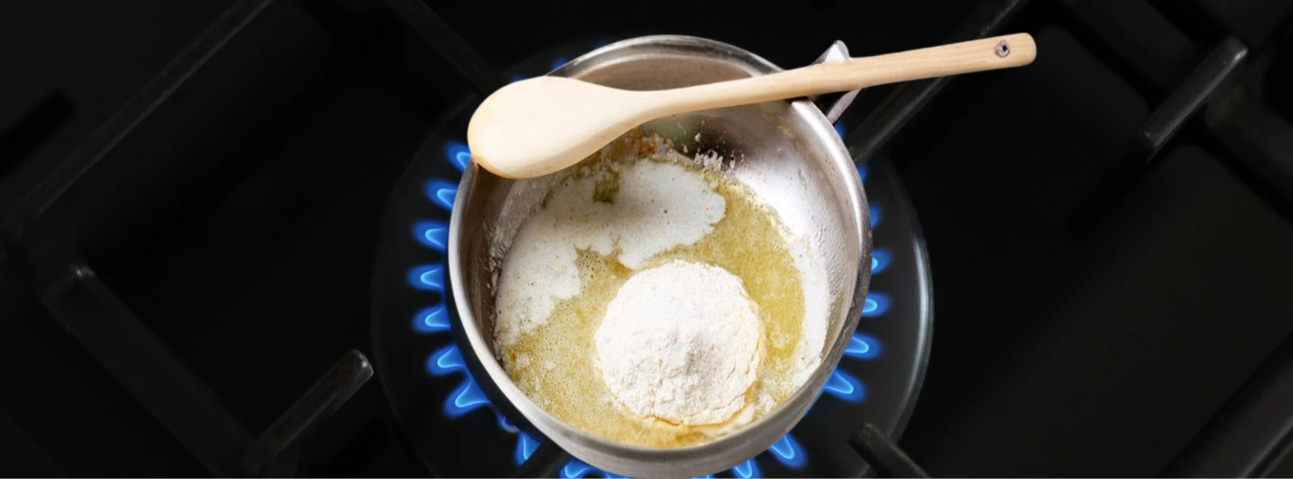
2. Add the flour. Add the flour all at once. Stir with a wooden spoon or spatula until the butter and flour form a smooth paste. This paste is called a roux.
3. Cook the roux. Keep stirring for 1 to 2 minutes. The roux should smell faintly nutty and look like wet sand. Don’t let it darken — a browned roux makes a brown sauce, not a béchamel.
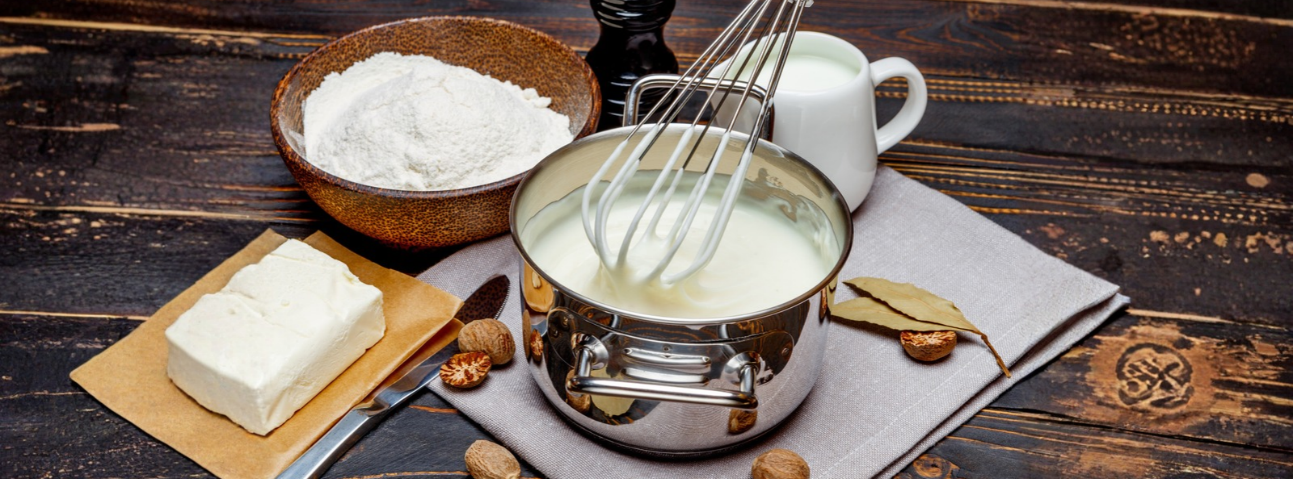
4. Add the milk — slowly. Pour the milk into the roux in a slow, steady stream, whisking constantly. Don’t dump it in all at once. Add some, whisk until smooth, add more, whisk again. This is the single most important step for preventing lumps.
5. Simmer until thickened. Bring the sauce to a bare simmer — small bubbles breaking at the surface, not a boil. Cook for 5 to 10 minutes, whisking occasionally, until the sauce coats the back of a spoon.
6. Season. Add salt, white pepper, and a small pinch of nutmeg. Stir to combine and taste.
7. Check the consistency. Dip a spoon into the sauce and run your finger down the back. If the line stays clean and the sauce doesn’t run into it, the béchamel is ready.
8. Use or store. Use immediately, or cool and refrigerate.
Two Ways to Make It (Both Authentic)
There are two methods for combining the roux and the milk. Both work. Pick the one that fits your kitchen and your mood.
Method 1 — Hot roux, cold milk
Make the roux in a pan, then pour in cold milk slowly while whisking. This is the method most French home cooks use. It’s straightforward and works well on a weeknight.
Chef’s note: If the pan feels too hot to handle, move it on and off the flame as you whisk. And keep the pan flat on the burner — don’t tilt it to the side. Tilting creates hot spots and scorches the sauce in one corner.
Method 2 — Cold roux, hot milk
Make the roux in one pan and set it aside. Heat the milk in a separate saucepan with the salt, pepper, and nutmeg. Let the seasonings infuse into the milk for a few minutes — you’ll smell the difference. Then whisk the hot seasoned milk into the cold roux, slowly.
Chef’s note: This method is more aromatic because the seasonings cook into the milk before the roux is added. The flavor is deeper. If you have the extra pan and the extra five minutes, this is the version worth making.
The Ratio
Once you know the ratio, you don’t need the recipe.
Thin béchamel: 1 tablespoon butter, 1 tablespoon flour, 1 cup milk. Cream sauces, soups.
Medium béchamel: 2 tablespoons butter, 2 tablespoons flour, 1 cup milk. Gratins, lasagna, mac and cheese.
Thick béchamel: 3 tablespoons butter, 3 tablespoons flour, 1 cup milk. Soufflés, croquettes, anything that needs to hold its shape.
Learn it as one-one-one, two-two-one, three-three-one. That’s all it takes.
Why It Works
Flour is mostly starch. When starch meets hot liquid, the granules swell and burst, releasing molecules that thicken the milk. The roux exists because raw flour clumps when it hits liquid. Coating the flour in fat first separates each granule, so when the milk arrives, they hydrate individually instead of in clumps.
Three things break the sauce:
Cold milk added too fast seizes the flour into lumps.
Undercooked roux leaves raw flour that tastes like paste.
Boiling the sauce scorches the starch and gives it a burnt edge.
Warm milk. Cooked roux. Gentle heat. That’s the whole technique.
What Béchamel Becomes
Add one ingredient and you have another sauce.
Grated Gruyère → Mornay. Gratins, mac and cheese, vegetables.
Grated cheddar → cheddar sauce. Mac and cheese, broccoli.
Mustard → mustard sauce. Ham, pork, chicken.
Horseradish → horseradish sauce. Beef, fish.
Fresh herbs → herb sauce. Fish, chicken, vegetables.
Cooked, puréed onion → soubise. Roast lamb, vegetables.
Cream → cream sauce. Pasta, fish, vegetables.
Curry powder → curry sauce. Vegetables, chicken, eggs.
Stock + cream → velouté-style sauce. Chicken, veal.
Most of these dishes also start with meat that’s been seared or roasted — the sauce goes on top.
This is what “mother sauce” means. One base, dozens of variations.
Recipe Notes
Substituting milk. Whole milk gives the richest result. Low-fat milk works but produces a thinner sauce. Cream makes a cream sauce, not a béchamel — different category.
Substituting flour. Cornstarch or a gluten-free blend works. Use half the amount, since cornstarch thickens about twice as much as flour.
Adding cheese. Add it off the heat and stir until melted. Cheese added over heat can break the sauce.
Fixing lumps. Pass the sauce through a fine-mesh sieve into a clean pan and keep going. Nothing is lost.
Fixing a scorched bottom. Pour the sauce into a clean pan and leave the burnt layer behind. Don’t scrape — the burnt taste will follow.
Preventing a skin. Press plastic wrap directly onto the surface while the sauce cools.
Nutmeg. Classic béchamel has it. A small pinch adds warmth without being noticeable. Skip it and the sauce tastes flat.
Storage
Fridge: Up to 4 days in an airtight container, with plastic wrap pressed directly onto the surface.
Freezer: Up to 3 months. Thaw overnight in the fridge, then reheat gently with a splash of milk.
Reheating: Low heat, whisking occasionally. Don’t boil.
A properly thickened béchamel stores better and reheats more cleanly than a thin one.
The Takeaway
Béchamel is three ingredients and fifteen minutes. Learn the ratio and you don’t need the recipe. Learn why it thickens and you can fix it when it goes wrong. Learn what it becomes and you have a base for a dozen dishes.
That’s what a mother sauce is — a recipe you internalize until it becomes a reflex.

