Deep Frying: Mastering the Art of Crispy Wonders
Deep frying isn’t just “cooking in oil.” It’s a precise technique that relies on temperature, moisture, and timing. Here’s how professional kitchens deep fry — and why most home cooks get it wrong.
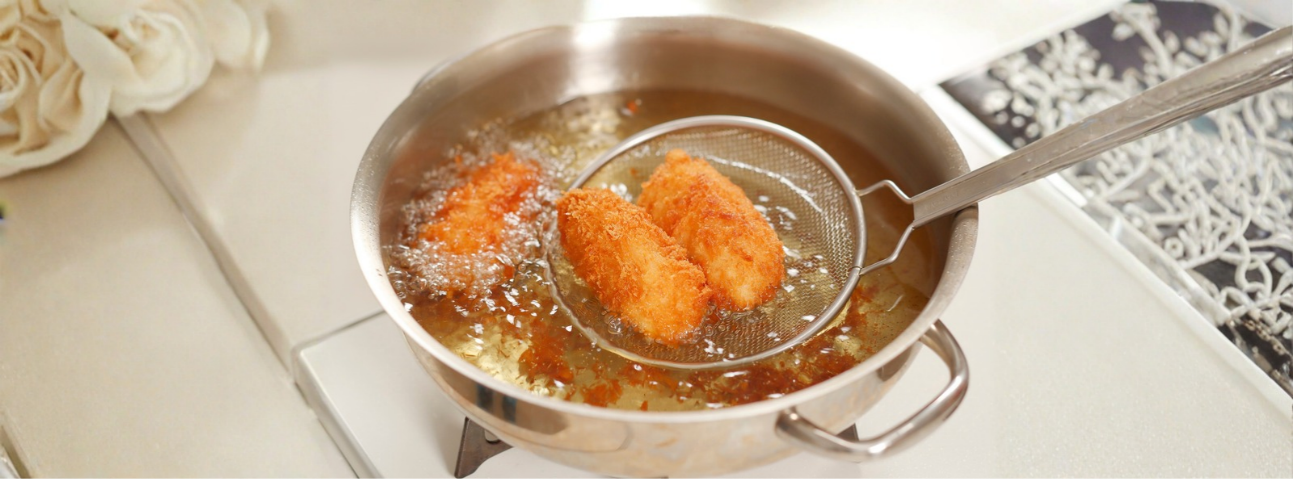
Deep frying is the most feared technique in home cooking. People worry about the oil temperature, the danger of splashing, the cleanup, and the health concerns. So they avoid it — and they miss out on one of the most rewarding techniques in the kitchen.
That’s a mistake. Because deep frying isn’t complicated. It’s just precise.
Once you understand the rules — the right temperature, the right oil, the right prep, the right timing — deep frying becomes as reliable as roasting or grilling. It’s the technique that produces tempura, pakoras, beignets, churros, fish and chips, fried chicken, French fries, and hundreds of other dishes around the world.
I’ve spent years working in professional kitchens, and deep frying was part of the daily rhythm. We fried chicken, fish, vegetables, doughnuts, potatoes. It’s the technique that produces the crispiest, most satisfying food in the kitchen — when it’s done right.
This guide explains how deep frying actually works, when to use it, and the mistakes I’ve seen home cooks make over and over.
The Deep Frying Cheat Sheet
| What | Details |
|---|---|
| What it is | Cooking food submerged in hot oil at a precise temperature |
| Temperature | 325–375°F (163–190°C) depending on the food |
| Best oils | Peanut, canola, vegetable, grapeseed (high smoke point) |
| Oils to avoid | Olive oil (burns), butter (burns) |
| Best pot | Deep, heavy pot with high sides (or a dedicated fryer) |
| Oil amount | Enough to fully submerge the food (2–3 inches minimum) |
| Food prep | Dry surface, coated or battered, brought to room temp |
| Batch size | Small — never crowd the pot |
| Signs of good fry | Golden-brown exterior, bubbles steady around the food |
| When to remove | When the food floats and the bubbles slow |
| After frying | Drain on a wire rack (not paper towels) |
| Oil reuse | Yes, if filtered and stored properly |
What Deep Frying Actually Does
Deep frying is the process of cooking food by fully submerging it in hot oil at a precise temperature.
Three things happen during a proper deep fry:
1. The Maillard reaction.
When food hits hot oil, the surface temperature rises above 300°F (150°C), triggering the Maillard reaction. This creates the golden crust, the deep flavor, and the signature crunch that defines deep-fried food.
2. Moisture evaporates from the food.
The water inside the food turns to steam and escapes through the surface. This steam actually protects the food from absorbing oil — as long as the temperature stays high, the steam pushes back against the oil, keeping the crust from getting greasy.
3. The crust seals the interior.
Once the surface dehydrates and browns, it forms a crust that keeps the interior moist. This is why a well-fried piece of chicken has crispy skin and juicy meat — the crust locks in the juices.
What deep frying is NOT:
Deep frying isn’t pan-frying or stir-frying. Pan-frying uses a shallow layer of oil and the food sits still to form a crust. Stir-frying uses very little oil and constant movement.
Deep frying also isn’t “greasy food.” When done at the right temperature, deep-fried food absorbs less oil than pan-fried food — because the steam barrier prevents it.
The Professional Way vs. The Home Cook Way
| Step | Home Cook | Professional |
|---|---|---|
| Oil temperature | Guessed or unmeasured | Verified with thermometer |
| Oil choice | Whatever's in the cupboard | High-smoke-point oil selected for the dish |
| Food prep | Sometimes wet or cold | Dry, coated, room temperature |
| Batch size | Fills the pot | Small batches, cooked to order |
| Temperature monitoring | Checks once at the start | Checks between batches |
| Draining | Paper towels | Wire rack |
| Seasoning | After cooling | Immediately, while hot |
| Oil management | Reuses until it looks dark | Filters and stores after each use |
| Safety | Not considered | Fire extinguisher nearby, never leaves the pot |
How I Deep Fry: 10 Steps, Start to Finish
Step 1: Choose the Right Oil
The oil you use determines the flavor, the smoke point, and the crispness. Choose oils with a high smoke point — at least 400°F (204°C).
Best oils for deep frying:
- Peanut oil — the classic choice. High smoke point, subtle flavor
- Canola oil — neutral, affordable, high smoke point
- Vegetable oil — neutral, widely available
- Grapeseed oil — high smoke point, clean flavor
Chef’s note: Never use olive oil or butter for deep frying. Both have low smoke points and burn at deep-frying temperatures.
Step 2: Choose the Right Pot
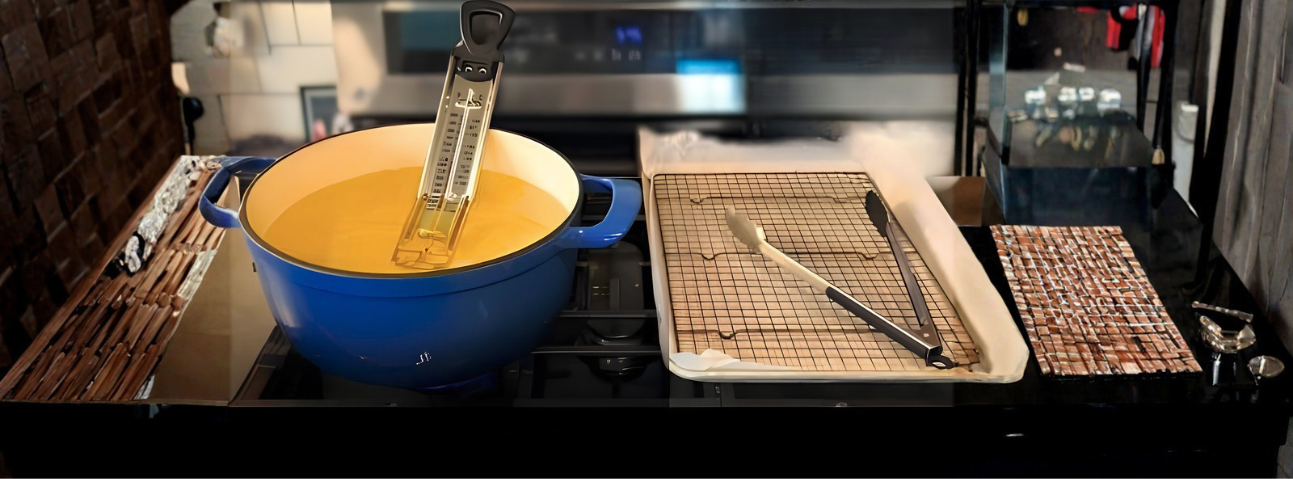
You need a deep, heavy pot with high sides. This prevents oil from splashing and holds the temperature steady.
Chef’s note: A cast iron Dutch oven is ideal. A dedicated countertop fryer works too. Don’t use a shallow pan — it’s dangerous and inefficient.
Step 3: Heat the Oil to the Right Temperature
This is the most important step. Different foods need different temperatures:
- 325°F: Dense foods that need to cook through (fried chicken, doughnuts)
- 350°F: Most foods (fish, vegetables, tempura)
- 375°F: Quick-cooking foods (French fries, chips, small items)
Chef’s note: Always use a thermometer. Guessing leads to either greasy or burnt food. The oil should be at the target temperature before the food goes in.
Step 4: Prep the Food Properly
The food must be dry, coated, and room temperature before it goes into the oil.
- Dry: Pat the food dry — any surface moisture causes splattering
- Coated: Bread, batter, or dust with flour/starch — this creates the crust
- Room temperature: Cold food drops the oil temperature, causing greasy results
Chef’s note: If you’re breading, let the coated food rest for 5–10 minutes before frying. This helps the coating adhere.
Step 5: Test the Oil Temperature
Before adding food, drop a small piece of bread or a pinch of batter into the oil. It should sizzle immediately and start browning in about 30 seconds.
Chef’s note: If it sinks, the oil is too cold. If it browns immediately and darkens quickly, the oil is too hot. Adjust and wait.
Step 6: Add the Food Carefully
Lower the food into the oil away from you — this prevents splashing onto your hands. Use tongs or a slotted spoon.
Chef’s note: Never drop food into the oil. Always place it gently. And never overcrowd the pot — the temperature drops and the food steams instead of frying.
Step 7: Maintain the Temperature
As food fries, the oil temperature drops. Adjust the heat as needed to keep the temperature within 10–15°F of the target.
Chef’s note: This is where most home cooks fail. They add food, the temperature drops, and they don’t notice — so the food fries at too low a temperature and comes out greasy.
Step 8: Watch for Doneness
Look for:
- Golden-brown color — not pale, not dark
- Steady bubbles around the food — this means moisture is still escaping
- The food floats — as moisture evaporates, the food becomes lighter
Chef’s note: Don’t rely on color alone. Bubbles are actually the better indicator — when the bubbles slow down significantly, the moisture is mostly gone and the food is done.
Step 9: Drain on a Wire Rack
Transfer the fried food to a wire rack — not paper towels.
Chef’s note: Paper towels trap steam, which softens the crust. A wire rack lets air circulate underneath, keeping the crust crispy. Place the rack over a baking sheet to catch drips.
Step 10: Season Immediately
Season the food while it’s hot — salt, pepper, or any other seasoning will stick to the surface.
Chef’s note: This is the step that separates good deep-fried food from great deep-fried food. Salt on hot food sticks. Salt on cold food falls off.
The Deep Frying Mistakes I’ve Watched Home Cooks Make
1. Oil not hot enough. This is the #1 mistake. Low temperature = greasy food.
2. Wet food. Surface moisture causes splattering and prevents crisping.
3. Cold food. Cold food drops the oil temperature. Bring food to room temperature.
4. Overcrowding the pot. Too much food drops the temperature. Fry in batches.
5. Wrong oil. Olive oil and butter burn. Use a high-smoke-point oil.
6. Not monitoring temperature. Oil temperature changes as food fries. Check between batches.
7. Draining on paper towels. This softens the crust. Use a wire rack.
8. Not seasoning immediately. Salt sticks to hot food. Season as soon as it comes out.
9. Reusing oil too many times. Oil breaks down over time — it darkens, smells, and imparts off flavors.
10. Leaving the pot unattended. Deep frying requires attention. Never walk away from hot oil.
Deep Frying Temperatures and Times
| Food | Oil Temp | Time | Internal Temp | Notes |
|---|---|---|---|---|
| French fries (blanched) | 325°F then 375°F | 5 min + 2 min | N/A | Double fry for crisp |
| Chicken wings | 350°F | 8–10 min | 165°F | Cook through |
| Fried chicken (bone-in) | 325°F | 12–15 min | 165°F | Lower temp for even cook |
| Fish fillets (battered) | 350°F | 4–5 min | 145°F | Crispy crust |
| Shrimp (battered) | 350°F | 2–3 min | 120°F | Cook fast |
| Onion rings | 375°F | 3–4 min | N/A | Golden brown |
| Tempura vegetables | 350°F | 2–3 min | N/A | Light and crispy |
| Doughnuts | 350°F | 2–3 min per side | N/A | Fry both sides |
| Churros | 375°F | 3–4 min | N/A | Roll in cinnamon sugar |
| Spring rolls | 350°F | 4–5 min | N/A | Even browning |
| Falafel | 350°F | 3–4 min | N/A | Golden brown |
| Mozzarella sticks | 350°F | 2–3 min | N/A | Frozen works best |
When Deep Frying Goes Wrong
Problem: The food is greasy.
Cause: Oil temperature too low, or too much food in the pot.
Fix: Increase heat, fry in smaller batches, and keep the oil at the target temperature.
Problem: The crust is pale, not golden.
Cause: Oil temperature too low, or food was wet.
Fix: Increase heat and dry the food thoroughly before frying.
Problem: The outside is burnt, inside is raw.
Cause: Oil too hot, or food too thick.
Fix: Lower the heat and fry longer, or finish in the oven.
Problem: The coating is falling off.
Cause: Food wasn’t dried, or the coating wasn’t pressed on.
Fix: Dry the food, press the coating firmly, and rest 5 minutes before frying.
Problem: The oil is smoking heavily.
Cause: Oil is too hot, or oil has broken down.
Fix: Lower heat. If the oil is dark or smells, discard and start fresh.
Problem: The food tastes like old oil.
Cause: Oil has been reused too many times.
Fix: Discard and use fresh oil. Filter used oil after every fry.
Problem: The food is sticking together.
Cause: Overcrowding the pot.
Fix: Fry in smaller batches and separate pieces as they enter the oil.
Problem: The oil splatters too much.
Cause: Food was wet, or food was frozen.
Fix: Dry the food thoroughly, or thaw frozen food before frying.
What to Serve With Deep-Fried Dishes
Deep-fried food pairs well with:
- Dipping sauces — aioli, ketchup, tartar sauce, soy sauce
- Fresh salads — for contrast and balance
- Rice or noodles — for a complete Asian-style meal
- Pickles — for acidity and crunch
- Lemon wedges — for brightness (especially with fish)
- French fries — for a classic pairing
Deep Frying Questions, Answered
1. What’s the best oil for deep frying?
Peanut, canola, vegetable, or grapeseed oil. High smoke point, neutral flavor.
2. Can I reuse deep-frying oil?
Yes. Filter it after each use and store it in a cool, dark place. Discard when it darkens or smells.
3. How do I know the oil is hot enough?
Use a thermometer. If you don’t have one, drop a small piece of bread into the oil — it should sizzle and start browning in about 30 seconds.
4. What’s the ideal temperature for deep frying?
325–375°F depending on the food. Most foods fry at 350°F.
5. Why is my fried food greasy?
Oil temperature is too low. When the oil is hot enough, steam from the food creates a barrier that prevents oil from absorbing.
6. Can I deep fry frozen food?
Yes — but add 1–2 minutes to the cooking time, and don’t overcrowd the pot. Frozen food drops the oil temperature.
7. Do I need a deep fryer, or can I use a pot?
A heavy pot works fine. A dedicated fryer is more convenient but not necessary.
8. How do I dispose of used frying oil?
Never pour it down the drain. Let it cool, then pour into a sealed container and dispose in the trash.
9. Is deep-fried food unhealthy?
Deep-fried food can be part of a balanced diet. When done properly, it absorbs less oil than pan-fried food.
10. Can I deep fry with olive oil?
No. Olive oil has a low smoke point and burns at deep-frying temperatures.
11. Should I season before or after frying?
For coated food (battered, breaded), season the coating before frying. For uncoated food (chips, herbs, plain vegetables), season after — salt sticks to hot food.
12. Why did my coating fall off in the oil?
The food wasn’t dried before coating, or the coating wasn’t pressed on firmly. Pat the food dry, press the coating, and let it rest 5 minutes before frying.
13. How many times can I reuse oil?
2–4 uses depending on what you’re frying and how hot the oil gets. Discard when it darkens, foams, or smells.
14. What’s the safest way to deep fry?
Use a deep pot, never fill more than halfway with oil, use a thermometer, and keep a lid nearby in case of fire.
15. Can I deep fry in a cast iron skillet?
You can, but a deep pot is safer and more efficient. Cast iron skillets are shallow and can splatter.
Peanut, canola, vegetable, or grapeseed oil. High smoke point, neutral flavor.
Yes. Filter it after each use and store it in a cool, dark place. Discard when it darkens or smells.
Use a thermometer. If you don’t have one, drop a small piece of bread into the oil — it should sizzle and start browning in about 30 seconds.
325–375°F depending on the food. Most foods fry at 350°F.
Oil temperature is too low. When the oil is hot enough, steam from the food creates a barrier that prevents oil from absorbing.
Yes — but add 1–2 minutes to the cooking time, and don’t overcrowd the pot. Frozen food drops the oil temperature.
A heavy pot works fine. A dedicated fryer is more convenient but not necessary.
Never pour it down the drain. Let it cool, then pour into a sealed container and dispose in the trash.
Deep-fried food can be part of a balanced diet. When done properly, it absorbs less oil than pan-fried food.
No. Olive oil has a low smoke point and burns at deep-frying temperatures.
For coated food (battered, breaded), season the coating before frying. For uncoated food (chips, herbs, plain vegetables), season after — salt sticks to hot food.
The food wasn’t dried before coating, or the coating wasn’t pressed on firmly. Pat the food dry, press the coating, and let it rest 5 minutes before frying.
2–4 uses depending on what you’re frying and how hot the oil gets. Discard when it darkens, foams, or smells.
Use a deep pot, never fill more than halfway with oil, use a thermometer, and keep a lid nearby in case of fire.
You can, but a deep pot is safer and more efficient. Cast iron skillets are shallow and can splatter.
Final Thoughts
Deep frying is the technique that separates confident cooks from hesitant ones. It requires precision, attention, and a bit of courage. But it’s not complicated — it’s just specific.
The rules are simple:
- Use the right oil
- Heat to the right temperature
- Dry the food thoroughly
- Fry in small batches
- Monitor the temperature
- Drain on a wire rack
- Season immediately
Do those things, and deep frying becomes one of the most reliable techniques in your kitchen.
In professional kitchens, deep frying was the technique that produced the crispiest, most satisfying food on the menu. It wasn’t scary — it was precise.
Deep frying isn’t cooking. It’s precision, heat, and timing — producing crunch with every bite.
Disclaimer
This article is based on personal experience working in professional kitchens. Cooking techniques and results may vary based on your equipment, ingredients, and skill level. Photos are for illustrative purposes.