Roasting: A Chef’s Guide to Getting It Right Every Time
Roasting is the most forgiving technique in the kitchen — and the one most home cooks get wrong. Here’s how to roast meat and vegetables so they come out crisp outside, tender inside, every time.
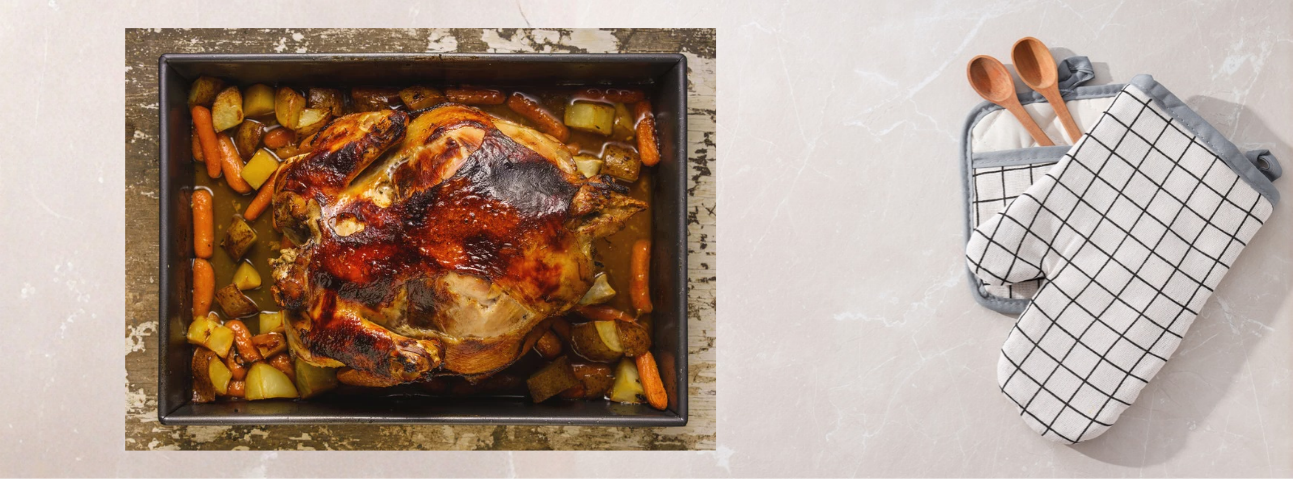
Roasting is one of the oldest cooking methods in the world. Our ancestors discovered that holding food over fire — not directly in it — created something different. Crisp outside, tender inside. Transformed.
That method hasn’t changed. Roasting is still one of the most useful techniques in any kitchen, professional or home. But somewhere along the way, it became misunderstood. Home cooks think roasting is just “putting food in the oven.”
It’s not.
Roasting has specific rules:
The oven has to be at the right temperature
The food has to be dry before it goes in
The pan matters
You have to know when to open the oven (almost never)
You have to rest the meat before slicing
I’ve spent years working in professional kitchens, and roasting was part of the daily rhythm. Whole chickens, prime rib, leg of lamb, pork loin, trays of root vegetables. It’s the technique that taught me patience — because roasting rewards patience and punishes rushing.
This guide explains how roasting actually works, how professional kitchens do it, and the mistakes I’ve seen home cooks make over and over.
Table of Contents
ToggleQuick Reference (Chef's Cheat Sheet)
| What | Details |
|---|---|
| What it is | Cooking food with dry, circulating heat in an oven |
| Oven temperature | 325–450°F (163–232°C) depending on the food |
| High heat | 400–450°F — for searing and crisping |
| Moderate heat | 325–375°F — for even cooking of large cuts |
| Best pans | Roasting pan with rack (meat), sheet pan (vegetables) |
| Food prep | Dry surface, seasoned, sometimes oiled |
| Time | 20 minutes (vegetables) to 4 hours (large roasts) |
| Doneness | Instant-read thermometer (never guess) |
| Rest time | 10–20 minutes for large roasts |
| Signs of good roast | Deep golden-brown crust, juices run clear |
What Roasting Actually Does
Roasting is the process of cooking food with dry, circulating heat in an oven, uncovered, without added liquid.
Three things happen during a proper roast:
1. The Maillard reaction.
When the surface of the food reaches 300°F (150°C) or higher, the Maillard reaction kicks in. This is the same browning that happens in searing, grilling, and pan-frying. It creates the golden crust, the deep flavor, and the aroma that define roasted food.
2. Moisture evaporates from the surface.
Unlike braising (where moisture is trapped), roasting allows surface moisture to evaporate. This is what creates the crust. It’s also why roasting works best for foods with some fat content — the fat keeps the inside from drying out while the outside crisps.
3. Dry heat cooks evenly from all sides.
Because ovens circulate hot air, the food cooks evenly. This is different from pan-frying or grilling, where heat comes from one direction. It’s why roasting works well for large cuts that need to cook all the way through.
What roasting does NOT do:
Roasting isn’t the same as baking. Baking uses dry heat for foods like bread, cakes, and pastries. Roasting uses dry heat for foods like meat, poultry, and vegetables. The techniques overlap, but the intent is different — baking is about precision and structure, roasting is about flavor and texture.
The Professional Way vs. The Home Cook Way
| Step | Home Cook | Professional |
|---|---|---|
| Oven temperature | Guessed or copied from a blog | Verified with an oven thermometer |
| Food prep | Sometimes wet | Always dried, often seasoned overnight |
| Pan | Whatever's available | Roasting pan with rack for meat, sheet pan for vegetables |
| Oven opening | Checks every 10 minutes | Leaves it closed |
| Basting | Bastes repeatedly | Bastes once or twice max |
| Doneness check | Cuts into the meat | Uses instant-read thermometer |
| Resting | Serves immediately | Rests 10–20 minutes |
| Carving | Slices any direction | Slices against the grain |
Step-by-Step (From My Experience)
Step 1: Choose the Right Cut
Not every cut is meant for roasting. Roasting works best for:
Meat:
Whole chicken, chicken thighs (bone-in, skin-on)
Turkey (whole or breast)
Prime rib, beef tenderloin, ribeye roast
Pork loin, pork shoulder (for pulled pork)
Leg of lamb, rack of lamb
Vegetables:
Root vegetables — carrots, parsnips, potatoes, beets, turnips
Cruciferous — Brussels sprouts, cauliflower, broccoli
Squash — butternut, acorn, delicata
Onions, garlic, bell peppers
Chef’s note: Roasting is for foods that benefit from a crust. Delicate proteins (fish fillets, thin cuts) are better pan-seared or grilled. Tough cuts that need moisture (chuck roast, short ribs) are better braised.
Step 2: Preheat the Oven Fully
Set your oven to the correct temperature and wait for it to fully preheat — usually 15–20 minutes.
Chef’s note: Most home ovens run 25–50°F off from the dial. Use an oven thermometer inside to verify the actual temperature. This one fix changes everything.
Step 3: Dry and Season the Food
Pat the food completely dry with paper towels. Any surface moisture will steam instead of roast.
Season generously with salt and pepper. For meat, salt it 30–60 minutes before roasting, or even overnight in the fridge (dry brining).
Chef’s note: For poultry, separating the skin from the meat and rubbing salt underneath gives you crispier skin and better-flavored meat. This is what restaurant kitchens do.
Step 4: Choose Your Pan
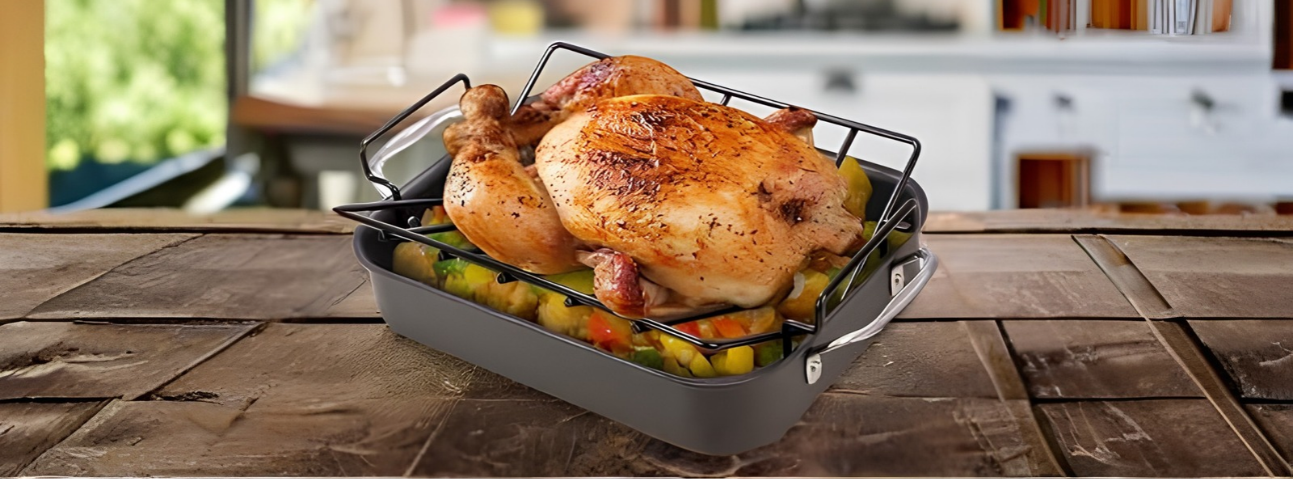
For meat: Use a roasting pan with a rack. The rack lifts the meat off the pan so heat circulates underneath.
For vegetables: Use a sheet pan. Spread them in a single layer with space between pieces.
Chef’s note: Don’t crowd the pan. If vegetables are piled on top of each other, they’ll steam instead of roast.
Step 5: Add Fat and Aromatics
Drizzle with oil or rub with butter. Add aromatics — garlic, herbs, lemon, onions.
Chef’s note: Oil the food, not the pan. Oil on the food helps it brown. Oil on the pan just burns.
Step 6: Roast — Don’t Open the Oven
Place the food in the oven and leave it alone.
Every time you open the oven door, the temperature drops 25–50°F. It takes several minutes to recover. This slows cooking and prevents even browning.
Chef’s note: In professional kitchens, we almost never opened the oven during roasting. If you need to check, use the oven light — most ovens have a window.
Step 7: Baste (Only Once, If At All)
If you want to baste, do it once — about halfway through cooking. More than that causes the oven temperature to drop repeatedly.
Chef’s note: Basting doesn’t make meat juicier (that’s a myth — it adds surface moisture that steams off). What it does is add flavor and color to the surface. Once is enough.
Step 8: Check Doneness With a Thermometer
Use an instant-read thermometer. This is non-negotiable.
Internal temperatures:
Chicken breast: 165°F
Chicken thigh: 175°F
Turkey: 165°F
Pork loin: 145°F
Beef (rare): 125°F
Beef (medium-rare): 130–135°F
Beef (medium): 140°F
Lamb (medium-rare): 130°F
Salmon: 125°F
Chef’s note: Pull the meat 5°F below target. Carryover cooking will bring it up to the right temperature while it rests.
Step 9: Rest the Meat
Transfer the meat to a cutting board and let it rest:
Chicken: 10 minutes
Pork loin: 10–15 minutes
Prime rib / beef roast: 15–20 minutes
Turkey: 20–30 minutes
Chef’s note: Resting is not optional. Cutting into a roast immediately loses all the juices onto the board. Resting allows them to redistribute back into the meat.
Step 10: Carve and Serve
Slice against the grain. Serve with the pan juices and roasted vegetables.
Chef’s note: For poultry, carve the breasts off first, then the legs and thighs. For beef roasts, slice across the grain into 1/2-inch slices.
The Mistakes I've Seen Most
1. Not preheating the oven fully. Cold oven = uneven cooking.
2. Not drying the food. Wet surface = steam instead of roast.
3. Using the wrong pan. A sheet pan for a whole chicken means no heat circulation. A rack makes a difference.
4. Crowding the pan. Vegetables piled on top of each other steam instead of roast.
5. Opening the oven too often. Every peek drops the temperature 25–50°F.
6. Basting repeatedly. Same reason — temperature drops every time.
7. Guessing doneness. Use a thermometer. Always.
8. Not resting the meat. The juices run out onto the board instead of staying in the meat.
9. Not seasoning ahead. Salt needs time to penetrate the meat.
10. Roasting at one temperature the whole time. Some foods benefit from high heat first (to brown), then lower heat (to cook through).
Temperature and Timing Guide
| Food | Oven Temp | Time | Internal Temp | Rest Time |
| Whole chicken (4 lb) | 425°F then 375°F | 15 min + 45–55 min | 165°F (breast) | 10 min |
| Chicken thighs | 400°F | 35–45 min | 175°F | 5 min |
| Turkey (12 lb) | 325°F | 3–3.5 hrs | 165°F | 20–30 min |
| Prime rib (5 lb) | 450°F then 325°F | 20 min + 1.5 hrs | 130°F (med-rare) | 15–20 min |
| Beef tenderloin (3 lb) | 425°F then 325°F | 15 min + 25–35 min | 130°F (med-rare) | 15 min |
| Pork loin (3 lb) | 375°F | 1–1.5 hrs | 145°F | 10–15 min |
| Leg of lamb (5 lb) | 450°F then 325°F | 15 min + 1.5 hrs | 130°F (med-rare) | 15 min |
| Salmon fillet (1 lb) | 400°F | 12–15 min | 125°F | 2 min |
| Root vegetables (cubed) | 425°F | 25–35 min | N/A | None |
| Brussels sprouts | 425°F | 20–25 min | N/A | None |
| Whole cauliflower | 425°F | 45–55 min | N/A | None |
Troubleshooting (What to Do When It Goes Wrong)
Problem: The outside is burnt but the inside is raw.
Cause: Oven temperature too high, or food is too thick.
Fix: Lower heat, cover loosely with foil, and continue cooking until internal temp is reached.
Problem: The meat is dry.
Cause: Overcooked, or wrong cut for roasting.
Fix: Use a thermometer. Pull 5°F below target. Choose fattier cuts.
Problem: The vegetables are soggy.
Cause: Crowded pan, or too much oil.
Fix: Spread vegetables in a single layer with space between pieces. Reduce oil.
Problem: The chicken skin isn’t crispy.
Cause: Moisture on the skin, or oven not hot enough.
Fix: Dry the skin thoroughly, use higher heat, and don’t baste.
Problem: The roast isn’t browning.
Cause: Oven temperature too low, or food was wet.
Fix: Increase heat, dry the surface, and use a rack.
Problem: Juices are burning in the pan.
Cause: Pan is too small or heat is too high.
Fix: Add a splash of stock or water to the pan, or use a larger pan.
Problem: The roast is cooking unevenly.
Cause: Oven hot spots.
Fix: Rotate the pan halfway through cooking.
What to Serve With Roasted Dishes
Roasted proteins pair well with:
Roasted vegetables — cook them on the same pan or a separate one
Mashed potatoes — classic pairing
Pan gravy — made from the pan drippings
Yorkshire pudding — classic with prime rib
Cranberry sauce — for poultry
Mint sauce — for lamb
Apple sauce — for pork
Roasted vegetables pair well with:
Lemon juice or vinegar (for brightness)
Fresh herbs (thyme, rosemary, sage)
Grated Parmesan
Balsamic glaze
Frequently Asked Questions
1. Should I roast with the oven door open or closed?
Closed. Every time you open the door, you lose 25–50°F. Use the oven light to check.
2. Should I cover the roast with foil?
Only if the outside is browning too fast. Otherwise, leave it uncovered for a crispy exterior.
3. Do I need a roasting rack?
For large cuts, yes. The rack lifts the meat so heat circulates underneath. For vegetables, no.
4. Should I baste the meat?
Once, halfway through, is enough. Basting doesn’t add juiciness — it adds surface flavor and color.
5. How do I know when the roast is done?
Use an instant-read thermometer. Never guess.
6. Should I bring the meat to room temperature before roasting?
Yes. Let it sit out 30–60 minutes before roasting. This helps it cook evenly.
7. How long should I rest the roast?
10–20 minutes for large cuts. 5–10 minutes for smaller cuts.
8. Can I roast vegetables at the same temperature as meat?
Yes, if the temperatures are close (375–425°F). Otherwise, roast them separately.
9. Can I roast frozen meat?
No. Thaw completely and dry the surface before roasting.
10. How do I get crispy chicken skin?
Dry the skin thoroughly, salt it, and roast at high heat (425°F) without covering.
11. What's the best pan for roasting?
A roasting pan with a rack for meat. A sheet pan for vegetables.
12. Can I roast at a lower temperature for longer?
Yes. Low-and-slow roasting (275–325°F) works well for large cuts like pork shoulder or prime rib. It takes longer but produces more even cooking.
Final Thoughts
Roasting is the technique that rewards patience. You set up the food correctly, put it in the oven, and leave it alone.
The rules are simple:
Preheat the oven fully
Dry and season the food
Use the right pan
Don’t open the oven
Use a thermometer
Rest the meat
Do those things, and roasting becomes one of the most reliable techniques in your kitchen.
In professional kitchens, roasting was the technique that fed the most people with the least active effort. It’s the technique that turns a simple chicken into a Sunday dinner and a leg of lamb into a holiday centerpiece.
Roasting isn’t cooking. It’s trusting the oven to do its job — and staying out of its way.
Disclaimer
This article is based on personal experience working in professional kitchens. Cooking techniques and results may vary based on your equipment, ingredients, and skill level. Photos are for illustrative purposes.