Sizzling Stir Frying Secrets: Rules Professional Kitchens Never Break
Stir-frying looks simple: hot wok, fast hands, dinner in five minutes. It’s not. Stir-frying is the technique that punishes hesitation — and rewards preparation more than any other method. Here’s how professional kitchens do it.
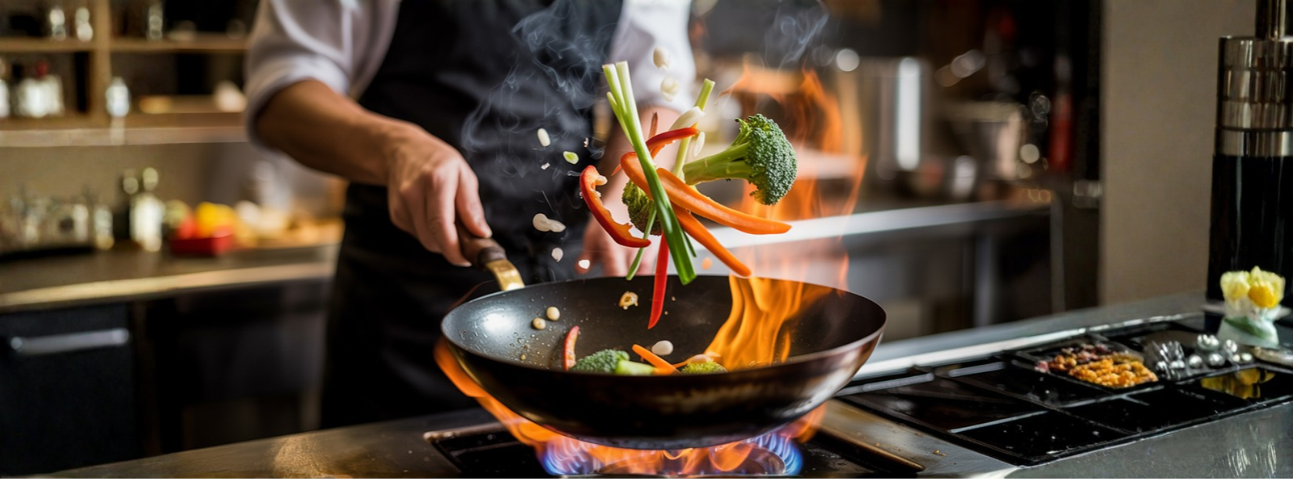
Stir-frying is the fastest cooking technique in any professional kitchen. It’s how vegetables get cooked to order. It’s how proteins get seared without losing moisture. It’s how a full meal goes from raw ingredients to plated dish in under five minutes.
But here’s the problem: most home cooks think stir-frying is just “cooking fast in a pan.”
It’s not.
Stir-frying has specific rules:
The wok has to be screaming hot — hotter than any other technique
Every ingredient has to be prepped before the wok heats
The food moves constantly — it never sits still
Ingredients go in at different times, based on how long they take to cook
The sauce is added last, in the final seconds
I’ve spent years working in professional kitchens, and stir-frying was part of the daily rhythm. We stir-fried vegetables, noodles, rice, chicken, beef, shrimp, tofu. It’s the technique that made the wok station move during service — fast, loud, and unforgiving.
This guide explains how stir-frying actually works, how professional kitchens do it, and the mistakes I’ve seen home cooks make over and over.
Table of Contents
ToggleQuick Reference (Chef's Cheat Sheet)
| What | Details |
|---|---|
| What it is | Cooking small, uniform pieces of food quickly over very high heat with constant movement |
| Best pan | Wok (carbon steel is best), or a large skillet |
| Heat level | Very high — the wok should be smoking-hot before food goes in |
| Best oils | Peanut, grapeseed, avocado — high smoke point |
| Food prep | Everything chopped, measured, and within arm's reach |
| Piece size | Uniform, bite-sized pieces |
| Batch size | Small — never crowd the wok |
| Time | 2–5 minutes total, start to finish |
| Order of ingredients | Aromatics → protein → hard vegetables → soft vegetables → sauce |
| Signs of good stir-fry | Bright colors, crisp texture, slight char, glossy sauce |
| After cooking | Serve immediately — stir-fry doesn't wait |
What Stir-Frying Actually Does
Stir-frying is the process of cooking small, uniform pieces of food quickly over very high heat with constant movement.
Three things happen during a proper stir-fry:
1. High heat sears the surface.
When food hits a screaming-hot wok, the surface temperature rises above 300°F (150°C), triggering the Maillard reaction. This creates the browned edges, the slight char, and the deep flavor that define stir-fried food. The heat is higher than pan-frying or sautéing — this is what makes stir-frying unique.
2. Constant movement cooks evenly.
The food never sits still. This prevents burning, cooks every side evenly, and creates the “wok hei” — a smoky, slightly charred flavor that only happens when food hits a very hot wok.
3. Moisture evaporates fast.
Because the wok is very hot and the food moves constantly, surface moisture evaporates instantly. This is what keeps vegetables crisp instead of soggy, and meat tender instead of steamed.
What stir-frying is NOT:
Stir-frying isn’t sautéing. Sautéing uses a moderate amount of oil in a regular pan over medium-high heat. Stir-frying uses a wok over very high heat, with less oil and much faster movement.
Stir-frying also isn’t pan-frying. Pan-frying uses a shallow layer of oil and the food stays still to form a crust. Stir-frying keeps the food moving constantly and uses very little oil.
The Professional Way vs. The Home Cook Way
| Step | Home Cook | Professional |
|---|---|---|
| Pan | Whatever's available | Carbon steel wok, seasoned |
| Heat | Medium-high | Screaming hot |
| Prep | Chops as they go | Preps everything before heat |
| Piece size | Random, uneven | Uniform, bite-sized |
| Batch size | Fills the wok | Cooks in small batches |
| Movement | Stirs occasionally | Constant movement |
| Order | Everything at once | Aromatics → protein → hard veg → soft veg → sauce |
| Sauce | Dumped in early | Added in the last 30 seconds |
| Serving | Whenever plates are ready | Immediately off the wok |
Step-by-Step (From My Experience)
Step 1: Prep Everything First (Mise en Place)
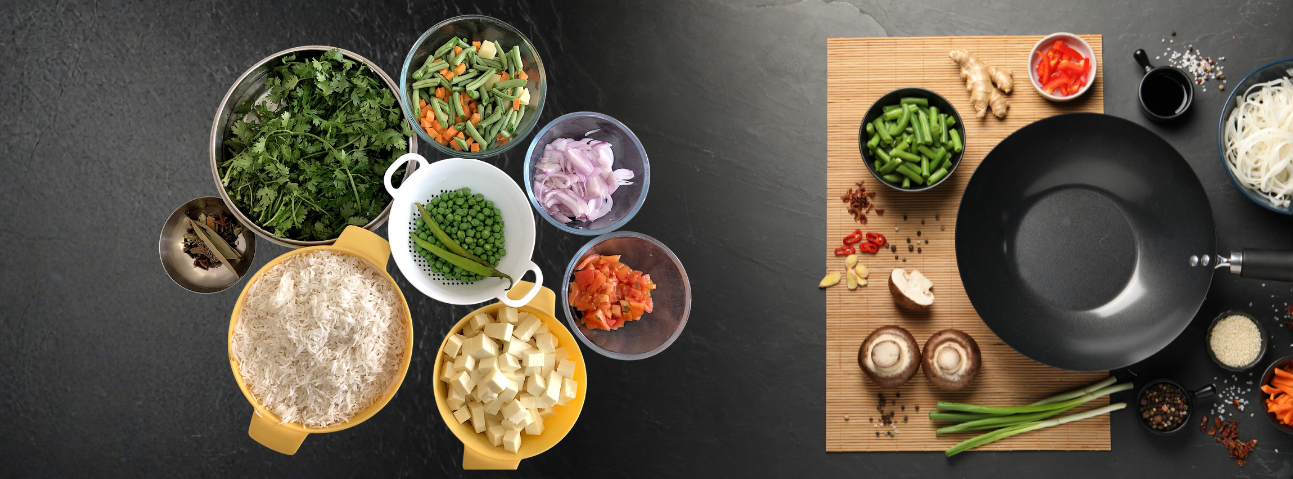
Stir-frying is fast. Once the wok is hot, you won’t have time to chop an onion or mix a sauce. Everything must be ready before you turn on the heat.
Do all prep before the wok heats:
Cut all vegetables into uniform, bite-sized pieces
Slice proteins thinly against the grain
Mix the sauce in a small bowl
Have the aromatics (garlic, ginger, scallions) ready
Set the oil, salt, and any finishing ingredients next to the stove
Chef’s note: This is mise en place. In professional kitchens, we had every ingredient prepped, portioned, and within arm’s reach before the wok got hot. If you’re not prepped, you’re not stir-frying — you’re just making a mess.
Step 2: Choose the Right Pan
A wok is the traditional tool — and it’s the right one. But you can also use a large skillet.
Best options:
Carbon steel wok — the professional’s choice. Heats fast, holds heat well, develops a natural non-stick surface
Cast iron wok — great heat retention, but heavy
Large skillet — works if you don’t have a wok, but not ideal
Chef’s note: A non-stick wok is a waste of money. Non-stick coatings break down at stir-frying temperatures. Use carbon steel.
Step 3: Heat the Wok Until It Smokes
Place the wok over high heat and let it heat for 2–3 minutes. It should be screaming hot — hot enough that a drop of water evaporates instantly, hot enough that the oil shimmers the moment it hits the surface.
Chef’s note: This is the step most home cooks get wrong. They heat the wok to “medium-high” and wonder why their stir-fry is soggy. The wok needs to be very hot. If you’re not a little nervous when you add the food, the wok isn’t hot enough.
Step 4: Add the Oil
Add 1–2 tablespoons of high-smoke-point oil. Swirl it around the wok to coat the surface.
Best oils for stir-frying:
Peanut oil (traditional, best flavor)
Grapeseed oil
Avocado oil
Canola oil
Chef’s note: Don’t use olive oil (it burns), and don’t use butter (it burns even faster). Peanut oil is the classic choice and adds a subtle flavor.
Step 5: Add the Aromatics First
Add garlic, ginger, and scallions (white parts) to the hot oil. Stir for 15–30 seconds — just until fragrant.
Chef’s note: Aromatics burn in seconds at stir-fry temperatures. Have everything ready and add them first, then move on immediately.
Step 6: Add the Protein
Add the protein (chicken, beef, shrimp, tofu) in a single layer. Let it sit for 30 seconds to sear, then stir-fry for 1–2 minutes until just cooked through.
Chef’s note: Don’t overcrowd the wok. If you have a lot of protein, cook it in batches and set it aside. The wok needs to stay hot.
Step 7: Add the Hard Vegetables
Add hard vegetables next — carrots, broccoli, bell peppers, onions. Stir-fry for 1–2 minutes.
Chef’s note: Hard vegetables take longer to cook. They go in before soft vegetables.
Step 8: Add the Soft Vegetables
Add soft vegetables last — mushrooms, spinach, bean sprouts, snow peas. Stir-fry for 30 seconds to 1 minute.
Chef’s note: Soft vegetables cook in seconds. If you add them too early, they turn to mush.
Step 9: Add the Sauce
Add the sauce in the last 30 seconds. Stir to coat everything evenly. The sauce should thicken slightly from the heat.
Chef’s note: Sugar-based sauces (teriyaki, hoisin) burn quickly. Add them at the very end. If the sauce has cornstarch, stir it in just before adding to prevent clumping.
Step 10: Serve Immediately
Stir-fried food is best served hot and fresh. Plate it immediately and serve.
Chef’s note: In a restaurant, stir-fried food goes straight from the wok to the plate. It doesn’t sit. At home, do the same — have your plates warm and ready.
Temperature and Timing Guide
| Ingredient | Order | Time in Wok | Notes |
|---|---|---|---|
| Garlic, ginger, scallions | 1st | 15–30 sec | Until fragrant |
| Chicken (sliced) | 2nd | 1–2 min | Cook through |
| Beef (sliced) | 2nd | 1–2 min | Sear, don't steam |
| Shrimp | 2nd | 1–2 min | Pink and curled |
| Tofu (firm, cubed) | 2nd | 2–3 min | Golden edges |
| Carrots (sliced thin) | 3rd | 1–2 min | Tender-crisp |
| Broccoli (small florets) | 3rd | 2–3 min | Bright green |
| Bell peppers (sliced) | 3rd | 1–2 min | Tender-crisp |
| Onions (sliced) | 3rd | 1–2 min | Slightly soft |
| Mushrooms (sliced) | 4th | 1–2 min | Golden edges |
| Snow peas | 4th | 30 sec – 1 min | Bright green |
| Spinach | 4th | 30 sec | Wilted |
| Bean sprouts | 4th | 30 sec | Slightly soft |
| Sauce | Last | 30 sec | Coat evenly |
Troubleshooting (What to Do When It Goes Wrong)
Problem: The vegetables are soggy.
Cause: Wok not hot enough, or too much food in the wok.
Fix: Heat the wok until smoking-hot and cook in smaller batches.
Problem: The food is burning.
Cause: Wok too hot, or food sitting still.
Fix: Lower the heat slightly, and keep the food moving constantly.
Problem: The sauce is watery.
Cause: Too much liquid, or sauce added too early.
Fix: Add sauce in the last 30 seconds. Use cornstarch slurry to thicken if needed.
Problem: The sauce is burning.
Cause: Sugar-based sauce added too early.
Fix: Add sweet sauces at the very end. Stir constantly.
Problem: The protein is dry.
Cause: Overcooked.
Fix: Cook protein first, set aside, and add it back at the end with the sauce.
Problem: The food tastes bland.
Cause: Not enough salt or aromatics.
Fix: Add more garlic, ginger, and scallions at the start. Salt at the end.
Problem: The wok is smoking heavily.
Cause: Oil is burning.
Fix: Lower the heat slightly. Use a higher-smoke-point oil.
What to Serve With Stir-Fried Dishes
Stir-fries are a complete meal on their own, but they pair well with:
Rice — jasmine, basmati, or short-grain
Noodles — rice noodles, egg noodles, soba
Cauliflower rice — for a lower-carb option
Quinoa — for a protein boost
Lettuce wraps — for a lighter meal
Steamed buns — for a heartier meal
Frequently Asked Questions
1. Do I need a wok to stir-fry?
No. A large skillet works, but a wok is better — it’s designed for high heat and constant movement.
2. What's the best oil for stir-frying?
Peanut, grapeseed, or avocado oil. They have high smoke points and neutral flavors.
3. Why is my stir-fry soggy?
Wok not hot enough, or too much food in the wok. Heat the wok until smoking-hot and cook in smaller batches.
4. Should I marinate the protein first?
Yes. Even 15 minutes in soy sauce, cornstarch, and a little oil makes a difference. It tenderizes and adds flavor.
5. Can I use frozen vegetables?
Yes, but they release water and steam before they stir-fry. Thaw and dry them for better results.
6. What's the order of ingredients?
Aromatics → protein → hard vegetables → soft vegetables → sauce.
7. Do I need to preheat the wok before adding oil?
Yes. The wok should be hot before the oil goes in. The oil should shimmer the moment it hits the surface.
8. Can I stir-fry with olive oil?
No. Olive oil burns at stir-fry temperatures. Use a high-smoke-point oil.
9. How do I prevent the sauce from burning?
Add sugar-based sauces in the last 30 seconds. Stir constantly.
10. Can I stir-fry rice?
Yes. Use day-old rice (fresh rice is too wet). Stir-fry in a hot wok with oil, aromatics, and sauce.
11. Should I add salt?
Taste first. Soy sauce, oyster sauce, and other stir-fry sauces are already salty. Add more only if needed.
12. How do I clean a wok?
Rinse with hot water, scrub with a soft brush, dry immediately. Don’t use soap on carbon steel — it removes the seasoning.
Final Thoughts
Stir-frying is the fastest technique in the kitchen — and the most demanding. It requires preparation, timing, and attention. But when done right, it produces food that’s bright, crisp, and full of flavor in under five minutes.
The rules are simple:
Prep everything first
Heat the wok until it smokes
Use the right oil
Add ingredients in the right order
Keep the food moving
Add sauce at the end
Serve immediately
Do those things, and stir-frying becomes one of the most rewarding techniques in your kitchen.
In professional kitchens, stir-frying was the technique that moved the wok station during service. It wasn’t fancy — it was fast, controlled, and always in motion.
Stir-frying isn’t cooking. It’s timing, heat, and motion — all happening at once.
Disclaimer
This article is based on personal experience working in professional kitchens. Cooking techniques and results may vary based on your equipment, ingredients, and skill level. Photos are for illustrative purposes.