Julia Child: The Woman Who Taught America to Cook
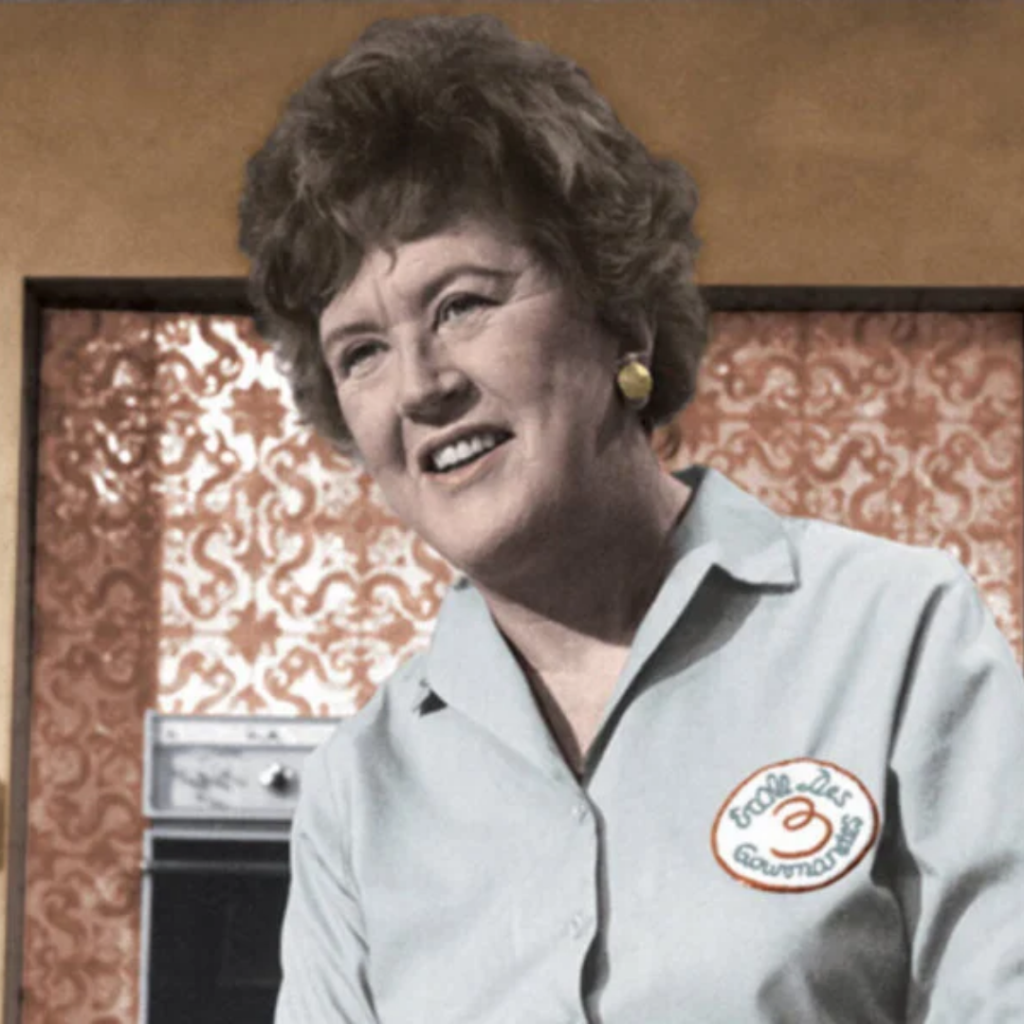
Julia Child didn’t start cooking until she was 36.
That’s the first thing to know about her. She wasn’t a prodigy. She wasn’t raised in a kitchen. She was a tall, loud, curious woman from Pasadena who took a job during World War II, fell in love with a man who loved French food, moved to Paris, and — almost by accident — ended up changing how America cooked.
Before Julia Child, French cuisine in America was something you read about in restaurant reviews. After her, it was something you made at home.
That’s the whole story. The rest is detail.
Before Cooking
Julia McWilliams was born on August 15, 1912, in Pasadena, California. Her family was well-off. She went to Smith College, played sports, and by her late twenties was working in New York and then in Washington, D.C.
When World War II broke out, she joined the Office of Strategic Services — the OSS, the precursor to the CIA. She worked in Ceylon (now Sri Lanka) and then in China. Her job was mostly clerical. But the OSS is where she met Paul Child.
Paul was a cultured, well-traveled man who had lived in France. He introduced Julia to French food — not the heavy, formal food she imagined, but the simple, careful, ingredient-driven cooking that French home cooks actually made. It was the first time she tasted food that felt like it mattered.
They married in 1946. Two years later, Paul was posted to Paris. Julia went with him.
Learning to Cook
In Paris, Julia enrolled at Le Cordon Bleu. She was 36 years old and the only woman in her class.
The training was brutal. The chef instructors were exacting. Julia was a slow learner at first — her knife work was uneven, her sauces broke, her timing was off. But she kept going. She practiced constantly. She asked questions.
One of her teachers, Chef Max Bugnard, took her seriously. He told her she had good hands. That was enough.
After cooking school, she joined a small cooking club called Le Cercle des Gourmettes, where she met Simone Beck and Louisette Bertholle. The three of them began working on a cookbook project — a book that would translate French cooking for American home cooks.
That project would take almost a decade.
Mastering the Art of French Cooking
The book was originally going to be short. It became enormous.
Julia and her co-authors tested every recipe repeatedly. They wrote instructions in painstaking detail — not just what to do, but why. They included temperatures, techniques, equipment notes, and variations.
The first publisher rejected it. So did the second. The third one — Knopf — finally agreed to publish it in 1961, when Julia was 49.
Mastering the Art of French Cooking was not an instant bestseller. But it sold steadily, and it became the book that Americans turned to when they wanted to understand French food.
Julia’s approach was different from every other cookbook writer of her time. She didn’t assume the reader already knew how to cook. She explained the technique behind every recipe. She made the reader feel like they could do it too.
The French Chef
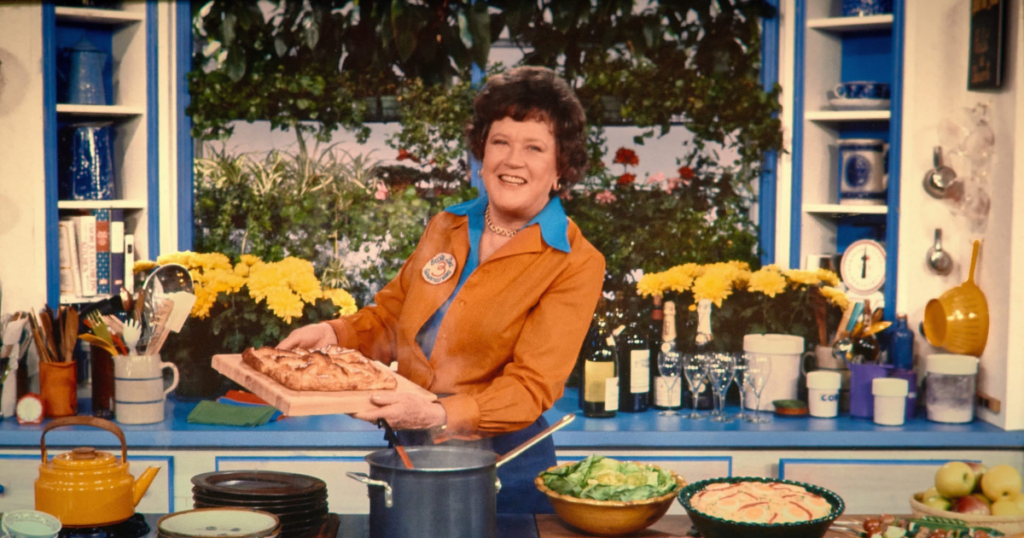
In 1962, Julia appeared on a Boston public television program to promote her book. She made an omelet. She was natural, funny, and completely unpretentious.
The station offered her a show. It premiered in 1963 as The French Chef.
It was unlike any cooking show that had existed before. Julia didn’t perform. She taught. She dropped things. She laughed at herself. She told viewers when a dish was difficult and when it was easy. She showed them what failure looked like and then showed them how to fix it.
The show ran for a decade and made her a household name. She went on to make several more series over the next 40 years.
What She Actually Changed
Julia Child didn’t invent French cooking in America. But she did three things that mattered.
She treated cooking as a skill, not a talent. Before Julia, most American cookbooks assumed the reader already knew how to cook. Julia assumed the opposite. She wrote for people who had never made a béchamel or deboned a duck. She taught technique, not just recipes.
She made mistakes part of the process. Julia dropped food on air. She burned things. She didn’t pretend. Watching her, viewers realized that even a trained chef could mess up — and that the point was to keep going.
She brought French food into American homes. Not the fancy restaurant version — the everyday version. The roast chicken. The omelet. The boeuf bourguignon. The dishes that real French families actually ate.
Those three things made her more than a TV personality. They made her a teacher.
The Person Behind the Show
Julia was loud. She was 6’2″. She had a distinctive, warbling voice that comedians imitated for decades.
She was also stubborn, disciplined, and deeply serious about her work. She tested recipes relentlessly. She rejected anything that didn’t taste right. She insisted that her co-authors get credit.
She and Paul were married for 48 years. He died in 1994. She died in 2004, two days before her 92nd birthday.
Why She Still Matters
Julia Child opened a door that had been closed. Before her, French cooking in America was something other people did. After her, it was something anyone could learn.
Every home cook who has ever tried to make a béchamel, a roast chicken, or a proper omelet is following in her footsteps — even if they’ve never seen her show.
She was not the best chef in America. She wasn’t even the best French chef in America. But she was the one who made the rest of us believe we could try.
That’s the legacy.