Deglazing: How to Turn Pan Bits Into Sauce
Deglazing is the technique that turns the browned bits stuck to the bottom of a pan into a sauce. You sear meat, pour in wine or stock, scrape the pan, and everything that looked like it needed to be scrubbed away becomes the base of something worth eating. It takes two minutes and turns a plain piece of meat into a dish that tastes like you did more than you did.
Prep time: 2 minutes
Cook time: 3–5 minutes
Total time: 5–7 minutes
Difficulty: Easy
Cuisine: French
Category: Technique
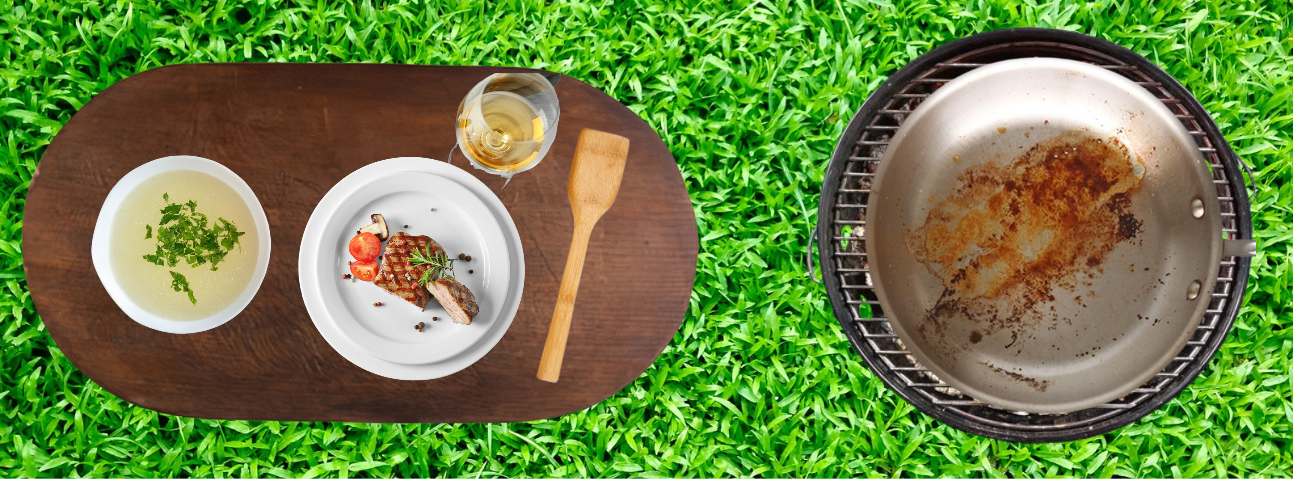
Table of Contents
ToggleWhat You Actually Need
A pan with browned bits — after searing, roasting, or pan-frying meat or vegetables
A liquid — wine, stock, broth, cider, vinegar, citrus juice, or water
A wooden spoon or spatula — for scraping the pan
That’s it. Three things.
How to Do It
1. Take the food out of the pan. Whatever you cooked — steak, chicken, pork chop — transfer it to a plate and let it rest. The pan stays on the heat.
Chef’s note: Don’t clean the pan. Don’t wipe it out. The brown bits are the point. In professional kitchens, we never washed a pan between searing and deglazing — those bits were the whole reason for the next step.
2. Pour in the liquid. With the pan still on medium heat, pour in about a quarter to a half cup of liquid. The pan will hiss and steam. That’s what you want.
What liquid to use:
Red wine — for beef, lamb, duck
White wine — for chicken, pork, fish
Stock or broth — for anything (chicken, beef, vegetable)
Cider — for pork
Vinegar — a splash, for brightness
Citrus juice — for fish or chicken
Water — if it’s all you have
Chef’s note: Wine is the classic choice because the acidity cuts through the fat from the searing. Stock is more versatile. If you use vinegar, use a small amount — a tablespoon — then add stock or water to make up the rest.
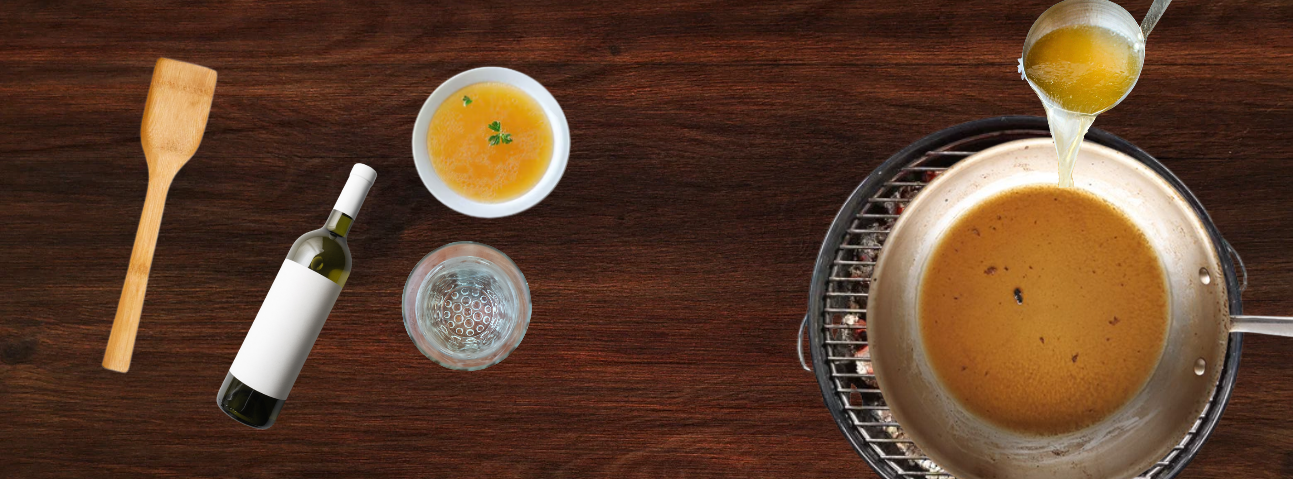
3. Scrape the pan. Use a wooden spoon or spatula to scrape the bottom of the pan. The browned bits will dissolve into the liquid as it heats. In a minute or two, the pan will be clean.
Chef’s note: Scrape firmly but don’t gouge the pan. The bits come off easily once the liquid is hot. If they’re stubborn, add another splash of liquid and let it heat for 30 more seconds.
4. Simmer and reduce. Let the liquid bubble and reduce for 2–3 minutes. It should thicken slightly and the flavor should concentrate.
Chef’s note: If you want a thicker sauce, add a small knob of cold butter at the end and swirl the pan until it melts. This is called monter au beurre — finishing with butter. It gives the sauce a glossy finish.
5. Season and serve. Taste the sauce. Add salt and pepper. Pour it over the rested meat and serve.
Why It Works
When you sear or pan-fry meat, sugars and proteins on the surface brown through the Maillard reaction. Some of those browned compounds stick to the pan. They’re concentrated flavor — the same compounds that make a steak taste like a steak.
Water alone won’t dissolve them. But wine, stock, or vinegar will. The acidity and alcohol in these liquids break down the browned compounds and pull them into the sauce. As the liquid reduces, those flavors concentrate.
That’s the whole technique. It’s not a recipe. It’s a method for using what’s already in the pan.
What You Can Make With It
Deglazing is the first step in:
Pan sauce — the most common use. Deglaze with wine or stock, add butter, serve over the meat.
Bordelaise sauce — red wine, shallots, and demi-glace (which itself comes from espagnole)
Chasseur sauce — white wine, mushrooms, shallots, and demi-glace
Piccata sauce — white wine, lemon, capers, and butter
Marsala sauce — Marsala wine and mushrooms
Gravy — deglaze with stock, thicken with flour or cornstarch
Au jus — deglaze with stock, serve the juices with the meat
Most of these sauces start with meat that’s been seared — the sear creates the browned bits that the deglaze picks up.
What to Use for Deglazing
| Liquid | Best For | Notes |
|---|---|---|
| Red wine | Beef, lamb, duck | Full-bodied, adds depth |
| White wine | Chicken, pork, fish | Lighter, adds brightness |
| Chicken stock | Chicken, pork | Mild, versatile |
| Beef stock | Beef, lamb | Richer, deeper |
| Vegetable stock | Vegetables, tofu | Light, neutral |
| Apple cider | Pork | Slightly sweet |
| Balsamic vinegar | Beef, pork | Use a small amount |
| Lemon juice | Fish, chicken | A squeeze, plus stock |
| Water | Anything | If nothing else is available |
Recipe Notes
Using alcohol. Wine and spirits add depth, but they need to cook off. Let the liquid simmer for at least a minute before serving — the alcohol evaporates and the flavor concentrates.
Using vinegar. Vinegar is strong. Use a small amount — a tablespoon or two — then add stock or water to make up the rest.
Using citrus. Lemon or lime juice works for fish and chicken but is best paired with stock or butter. Too much citrus alone makes a sauce that’s too tart.
Thickening the sauce. Add a small amount of cold butter at the end. Or whisk in a slurry (cornstarch + cold water) and simmer for 30 seconds.
Making it richer. After the liquid reduces, add a splash of cream. This turns a pan sauce into a cream sauce.
If the pan is too hot. Take it off the heat for 30 seconds before adding the liquid. Very hot pans can cause the wine to flare up.
If the sauce is too thin. Keep simmering. The liquid will reduce as it cooks.
If the sauce is too thick. Add a splash of stock or water and stir.
If the sauce is too salty. You probably used salted stock or added too much salt. Add a splash of water and taste again.
Storage
Pan sauces are meant to be made and served immediately. They don’t store well.
If you have leftover sauce, refrigerate it for up to 2 days. Reheat gently on the stove with a splash of stock.
The Takeaway
Deglazing is the technique that turns what looks like a dirty pan into a sauce. It’s not a recipe — it’s a method. Once you know how, you’ll do it every time you sear or pan-fry anything.
The rules are simple:
Don’t clean the pan
Pour in the liquid
Scrape the bottom
Simmer and reduce
Finish with butter
Season and serve
Make it once, and you’ll never look at a browned pan the same way again.