Cooking Stocks: A Chef’s Guide to Building Flavor From Scratch
Stocks are the foundation of every sauce, soup, and braise in a professional kitchen. Here’s how to make them properly — and why they’re worth the time.
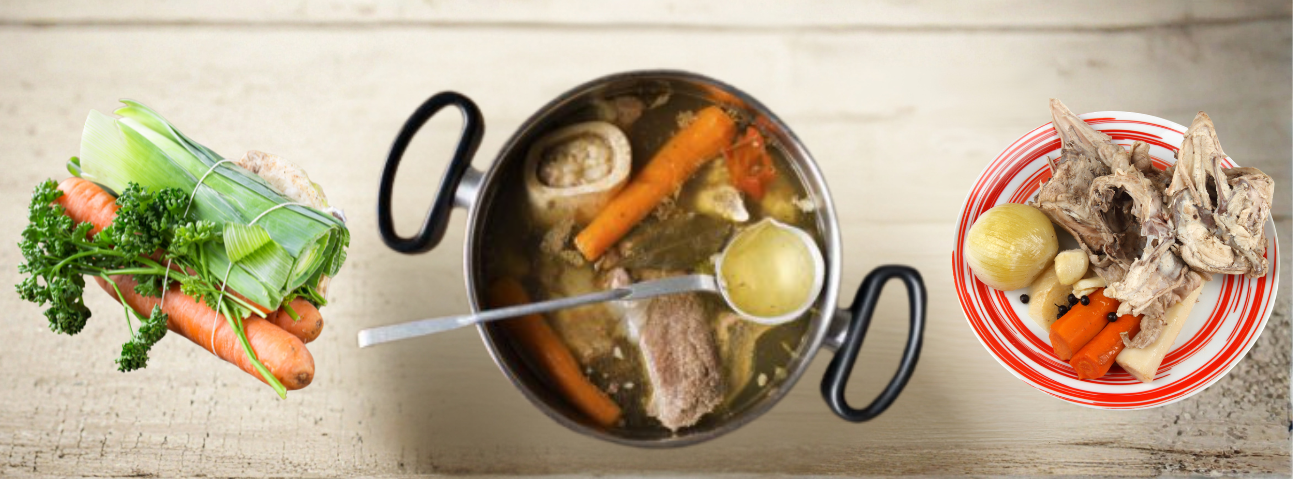
Every professional kitchen runs on stocks. They’re the base for sauces, soups, braises, risotto, and countless other dishes. Chefs call them “liquid gold” — not as a marketing phrase, but because they actually are that valuable.
But at home, stocks are often an afterthought. People buy cartons of stock at the supermarket, use them, and never think about making their own.
That’s a mistake. Homemade stock is one of the biggest differences between home cooking and restaurant cooking. It’s the reason restaurant sauces taste deeper, soups taste richer, and braised dishes taste more complex.
I’ve spent years working in professional kitchens, and making stocks was a daily task. We made chicken stock, veal stock, fish stock, vegetable stock. We used them in everything. And I can tell you: once you start using homemade stock, you can’t go back.
This guide explains how stocks actually work, how professional kitchens make them, and how to make them at home without overcomplicating it.
Table of Contents
ToggleQuick Reference (Chef's Cheat Sheet)
| What | Details |
|---|---|
| What it is | A flavorful liquid made by simmering bones, vegetables, and aromatics |
| Main types | Chicken, beef/veal, fish, vegetable |
| Key ingredients | Bones, mirepoix (onion, carrot, celery), aromatics, water |
| Simmer time | Chicken: 3–4 hrs; Beef: 6–8 hrs; Fish: 30–45 min; Vegetable: 45–60 min |
| Temperature | Bare simmer — never a rolling boil |
| Water ratio | Just enough to cover the bones |
| Skimming | Every 20–30 minutes for the first hour |
| Storage | Fridge: 4–5 days; Freezer: 3–6 months |
| Best use | Sauces, soups, braises, risotto, grains |
| Signs of good stock | Gelatinous when cold, rich flavor, clear color |
What Stocks Actually Do
A stock is a flavored liquid made by simmering bones, vegetables, and aromatics in water. During the simmer, flavor compounds, collagen, and minerals are extracted from the ingredients into the water.
Three things happen during a proper stock:
1. Collagen converts to gelatin.
Bones contain collagen — a connective tissue. When simmered slowly in water, collagen breaks down into gelatin. This is what gives stock its body and richness. A good stock becomes gelatinous when refrigerated — that’s the sign that you extracted the collagen properly.
2. Flavor compounds extract.
The vegetables (mirepoix), aromatics (herbs, peppercorns, bay leaves), and bones release their flavor into the water. This is what makes the stock taste like the ingredients that went into it — not just like salty water.
3. Impurities rise and are skimmed off.
As the stock simmers, proteins and impurities rise to the surface as foam. Skimming this off keeps the stock clear and clean-tasting.
What stocks are NOT:
Stocks aren’t broth. Broth is made with meat (not just bones) and is usually seasoned and meant to be consumed on its own. Stock is made with bones, is unseasoned, and is meant to be used as an ingredient.
The Professional Way vs. The Home Cook Way
| Step | Home Cook | Professional |
|---|---|---|
| Bones | Whatever's in the fridge | Roasted bones for deeper flavor |
| Water | Fills the pot | Just covers the bones |
| Simmer | Boils hard | Bare simmer |
| Skimming | Skips it | Skims every 20–30 min for first hour |
| Time | 1–2 hours | 3–8 hours depending on type |
| Seasoning | Salts the stock | Never salts (season the final dish) |
| Storage | Whatever's handy | Portioned, labeled, dated |
| Uses | Whenever I need it | Base for every sauce and soup |
Step-by-Step (From My Experience)
Step 1: Choose Your Stock Type
Each type of stock has its own use:
Chicken stock — the workhorse. Use for soups, sauces, risotto, braises.
Beef or veal stock — richer, deeper. Use for red meat sauces, French onion soup, braised beef.
Fish stock — light, delicate. Use for seafood soups, fish sauces.
Vegetable stock — versatile, vegetarian. Use for vegetarian dishes, risotto, soups.
Chef’s note: Start with chicken stock. It’s the most versatile and the most forgiving for beginners.
Step 2: Gather Your Ingredients
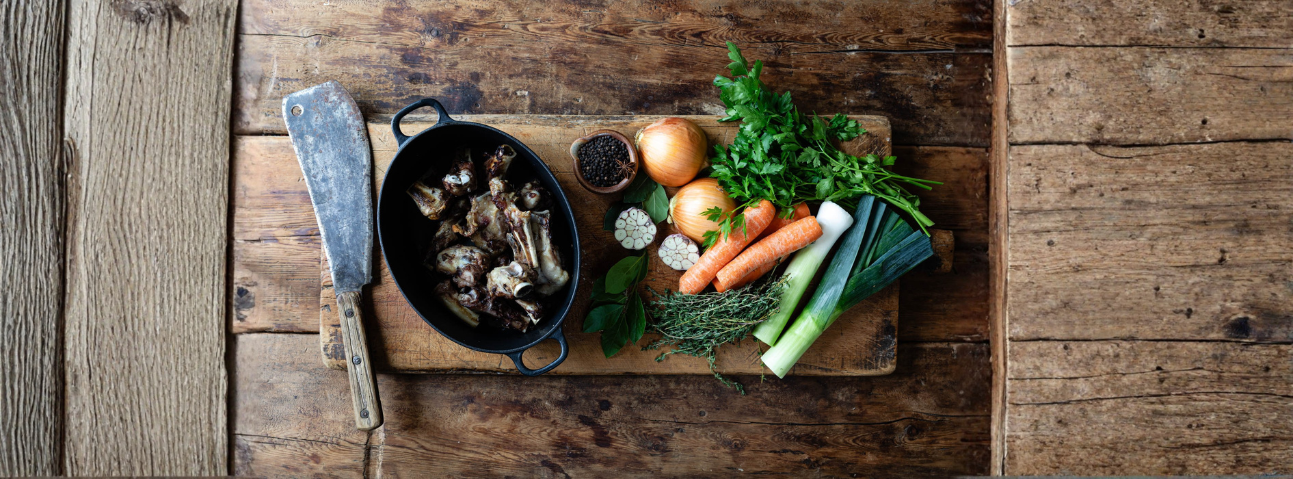
Basic formula:
Bones: 2–3 lbs (chicken, beef, or fish)
Mirepoix: 2 onions, 2 carrots, 2 celery stalks, roughly chopped
Aromatics: 2 bay leaves, 1 tsp black peppercorns, fresh herbs (thyme, parsley stems)
Water: Enough to just cover everything (about 8–12 cups)
Chef’s note: Don’t peel the onions — the skin adds color. Don’t chop the vegetables too small — they’ll break down during the long simmer.
Step 3: Roast the Bones (For Beef/Veal)
For beef or veal stock, roast the bones at 400°F for 30–40 minutes until deeply browned.
Chef’s note: This step is optional for chicken stock but essential for beef/veal. Roasting creates a deeper, richer flavor.
Step 4: Combine Everything in a Pot
Place the bones, mirepoix, and aromatics in a large stockpot. Add cold water — just enough to cover everything by about an inch.
Chef’s note: Always start with cold water. It draws out impurities slowly and produces a clearer stock.
Step 5: Bring to a Bare Simmer
Place the pot over medium heat and bring to a bare simmer — small bubbles rising slowly, not a rolling boil.
Chef’s note: Never boil a stock. Boiling makes the stock cloudy, churns up impurities, and can make it taste bitter.
Step 6: Skim the Surface
During the first hour, skim the foam and impurities that rise to the surface every 20–30 minutes.
Chef’s note: This is what makes the difference between a clear, restaurant-quality stock and a cloudy, home-cooked one.
Step 7: Simmer for the Right Amount of Time
| Stock Type | Simmer Time |
|---|---|
| Chicken | 3–4 hours |
| Beef/Veal | 6–8 hours |
| Fish | 30–45 minutes |
| Vegetable | 45–60 minutes |
Chef’s note: Fish and vegetable stocks need much less time. If you simmer fish stock for hours, it becomes bitter and fishy.
Step 8: Strain the Stock
Strain through a fine-mesh strainer into a large bowl. Discard the solids.
Chef’s note: For a clearer stock, line the strainer with cheesecloth.
Step 9: Cool Quickly and Store
Cool the stock as quickly as possible:
Fast method: Set the bowl in an ice bath, stirring occasionally
Slow method: Divide into smaller containers and refrigerate
Once cooled, refrigerate for up to 5 days or freeze for up to 6 months.
Chef’s note: Label and date everything. Frozen stock without a label is a mystery in 3 months.
Step 10: Use It Everywhere
Use stock instead of water in:
Soups
Sauces
Braises
Risotto
Grains (rice, quinoa, couscous)
Pan sauces (after deglazing)
Mashed potatoes
Chef’s note: This is the “pro tip” that changes everything. If a recipe calls for water and you have stock — use stock.
Temperature and Timing Guide
| Stock Type | Bones | Simmer Time | Water Ratio | Best For |
|---|---|---|---|---|
| Chicken | 2–3 lbs | 3–4 hrs | Just covers | Soups, risotto, sauces |
| Beef/Veal | 3–4 lbs | 6–8 hrs | Just covers | Red meat sauces, braises |
| Fish | 2 lbs | 30–45 min | Just covers | Seafood soups, sauces |
| Vegetable | N/A (2 lbs veg) | 45–60 min | Just covers | Vegetarian dishes |
| Mushroom | N/A (2 lbs mushrooms) | 1–2 hrs | Just covers | Vegetarian, risotto |
| Kombu (seaweed) | N/A | 20–30 min (no boil) | Just covers | Japanese dishes |
Troubleshooting (What to Do When It Goes Wrong)
Problem: The stock is cloudy.
Cause: Boiled instead of simmered, or not skimmed.
Fix: Skim more carefully next time and keep it at a bare simmer.
Problem: The stock is bland.
Cause: Too much water, not enough bones, or not enough simmering time.
Fix: Use more bones, less water, and simmer longer.
Problem: The stock tastes bitter.
Cause: Boiled too hard, or simmered too long (especially fish stock).
Fix: Simmer gently and shorten the time for delicate stocks.
Problem: The stock didn’t gel when refrigerated.
Cause: Not enough collagen — usually means not enough bones or not enough time.
Fix: Add more bones (especially knuckle or marrow bones) and simmer longer.
Problem: The stock spoiled quickly.
Cause: Cooled too slowly.
Fix: Use an ice bath to cool quickly, then refrigerate immediately.
Problem: The stock tastes too strong.
Cause: Bones or vegetables overpowered the liquid.
Fix: Dilute with a small amount of water when using, or use less of a strong-flavored ingredient next time.
What to Use Stock For
Stocks are the base for:
-
Soups — chicken noodle, French onion, minestrone, pho
-
Sauces — pan sauces, gravy, demi-glace, velouté
-
Braises — braised short ribs, coq au vin, osso buco
-
Risotto — chicken or vegetable stock is essential
-
Grains — cook rice, quinoa, or couscous in stock instead of water
-
Mashed potatoes — use warm stock instead of milk for richer flavor
-
Deglazing — After searing or pan-frying, use stock to lift the fond. See our guide to deglazing for more detail.
Frequently Asked Questions
1. What's the difference between stock and broth?
Stock is made with bones and is unseasoned. Broth is made with meat, is seasoned, and can be consumed on its own.
2. How long can I store homemade stock?
Fridge: 4–5 days. Freezer: 3–6 months.
3. Can I use a slow cooker to make stock?
Yes. Cook on low for 8–12 hours. The slow cooker maintains the bare simmer perfectly.
4. Can I use a pressure cooker?
Yes. Pressure cooking stock takes 45 minutes to 1 hour instead of 4–8 hours. The flavor is slightly different but very good.
5. Should I roast the bones first?
For beef and veal — yes, always. For chicken — optional but recommended. For fish — no.
6. Can I use raw bones?
Yes, but roasted bones give deeper flavor. For lighter stocks, raw bones work fine.
7. Do I have to skim the stock?
For a clear stock — yes. For a rustic stock — skimming is optional.
8. What vegetables should I avoid?
Broccoli, cabbage, cauliflower, turnips, and beets — they overpower the stock.
9. Can I make vegetable stock without scraps?
Yes. Use fresh vegetables: onions, carrots, celery, mushrooms, leeks, garlic.
10. Is store-bought stock a good substitute?
In a pinch, yes. But homemade stock has more body, less sodium, and better flavor.
11. Can I re-use bones for a second stock?
Yes — a second simmer extracts more flavor, but the result is weaker. Use it for soups rather than sauces.
12. How do I know when stock is done?
When it tastes rich and flavorful, and gels when cooled. If it’s watery and doesn’t gel, simmer longer.
Final Thoughts
Stocks are the foundation of good cooking. They’re not glamorous. They take time. But they’re the difference between food that tastes fine and food that tastes like a restaurant made it.
In professional kitchens, stocks were made every day — sometimes multiple times a day. They weren’t optional. They were the base of everything.
Make stock. Use stock. Replace water with stock wherever you can.
Stocks aren’t an ingredient. They’re the foundation of everything else.
Disclaimer
This article is based on personal experience working in professional kitchens. Cooking techniques and results may vary based on your equipment, ingredients, and skill level. Photos are for illustrative purposes.