Authentic Tomato Sauce Recipe | 5 Mother Sauces
Tomato sauce is the simplest of the five mother sauces, and the one most home cooks already think they know how to make. But the version that comes out of a jar is nothing like the version that comes out of a pot of ripe tomatoes cooked slowly with onion, carrot, celery, and garlic. It takes time — an hour and a half, mostly unattended — but most of that time is just the sauce simmering while you do something else. The result is a sauce with real depth: bright tomato flavor, a slight sweetness from the carrots, and a richness that comes from cooking the sauce long enough to concentrate everything.
Makes: About 4 cups
Prep time: 20 minutes
Cook time: 1–1.5 hours
Total time: 1.5–2 hours
Difficulty: Easy
Cuisine: Italian / French
Category: Mother sauce
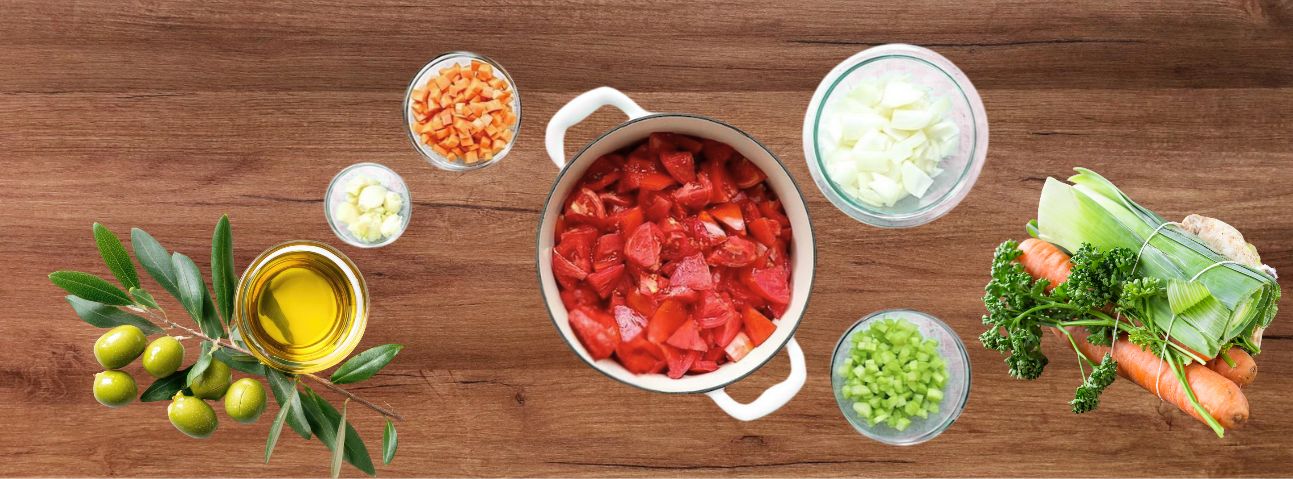
Table of Contents
ToggleIngredients
-
2 1/2 pounds ripe tomatoes
-
1/2 cup onion, chopped
-
1/4 cup carrot, chopped
-
1/4 cup celery, chopped
-
2 cloves garlic, minced
-
2 tablespoons olive oil
-
2 sprigs fresh thyme (optional)
-
1 bay leaf (optional)
-
Salt and pepper to taste
A note on the tomatoes. This recipe is built on fresh tomatoes. Canned whole peeled tomatoes (San Marzano if you can find them) work too — use two 28-ounce cans and skip step 1. Don’t use tomato sauce or crushed tomatoes from a jar; they’re already cooked and won’t develop the same flavor.
Instructions
1. Peel the tomatoes. Bring a pot of water to a boil. While it heats, score the bottom of each tomato with a small “X” using a paring knife. Drop the tomatoes into the boiling water for about 30 seconds, then transfer them to a bowl of ice water. The skins will slip off easily.
Chef’s note: The X on the bottom isn’t decorative — it gives the skin a place to start peeling back. Without it, the skin sticks.
2. Cut and seed the tomatoes. Peel the tomatoes and cut them in half. Scoop out the seeds with a spoon or your fingers. Dice the flesh into small pieces.
Chef’s note: Seeding is optional. If you like a more rustic sauce, leave the seeds in. The seeds add a slight bitterness, which some cooks like and others don’t.
3. Sauté the vegetables. Heat the olive oil in a heavy-bottomed saucepan over medium heat. Add the onion, carrot, and celery. Cook for about 5 minutes, until the vegetables are soft and just starting to color.
Chef’s note: This combination — onion, carrot, celery — is a mirepoix. It’s the same base you’ll find in espagnole, velouté, and most classical French cooking. The carrot adds a subtle sweetness that balances the acidity of the tomatoes.
4. Add the garlic. Add the minced garlic and cook for another minute, until fragrant. Don’t let it brown — browned garlic turns bitter.
5. Add the tomatoes and herbs. Add the diced tomatoes to the saucepan, along with the thyme and bay leaf if you’re using them. Stir to combine.
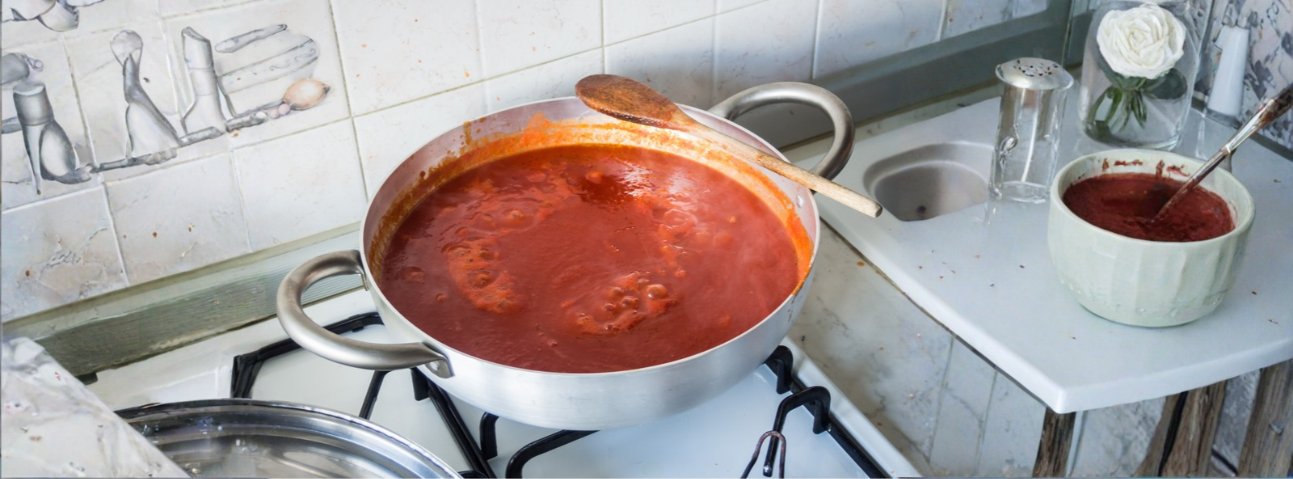
6. Simmer. Reduce the heat to low. Cook the sauce at a bare simmer for 1 to 1.5 hours, stirring occasionally. The sauce will reduce, darken, and thicken as it cooks.
Chef’s note: Don’t rush this. The long simmer is what develops the flavor. A 20-minute tomato sauce tastes like tomatoes that have been warmed up. A 90-minute tomato sauce tastes like tomato sauce.
7. Remove the herbs. Fish out the thyme sprigs and the bay leaf.
8. Blend. Use a blender, immersion blender, or food mill to purée the sauce until smooth. For a more rustic sauce, skip this step and leave it chunky.
Chef’s note: If you’re using a countertop blender, work in batches and don’t fill the blender more than halfway. Hot sauce expands when blended and can blow the lid off.
9. Season. Add salt and pepper to taste. Taste and adjust — the sauce may need more salt than you expect, especially if the tomatoes were mild.
10. Use or store. Use immediately, or cool and refrigerate.
Two Versions of making Tomato Sauce
There are two ways to make tomato sauce, and both are correct depending on what you want.
Fresh Tomato Sauce (this recipe)
Made with fresh tomatoes that are peeled, seeded, and cooked down with aromatics. Brighter, more acidic, and lighter in body. The version to make in late summer when tomatoes are at their best.
Canned Tomato Sauce (the shortcut)
Made with canned whole peeled tomatoes, which are already cooked and concentrated. Faster, more consistent, and available year-round. Use two 28-ounce cans and skip the peeling and seeding step. The rest of the recipe is identical.
Chef’s note: In a professional kitchen, we used canned tomatoes most of the year and fresh tomatoes only during tomato season. Canned tomatoes are picked at peak ripeness and processed immediately, so they often taste better than fresh tomatoes from the supermarket in winter.
What Makes It a Mother Sauce
Tomato sauce is one of the five mother sauces in classical French cooking, and it’s the most used in Italian cooking. It’s the base for:
-
Marinara — tomato sauce with garlic, oregano, and red pepper flakes
-
Bolognese — tomato sauce with ground meat and soffritto
-
Puttanesca — tomato sauce with olives, capers, and anchovies
-
Amatriciana — tomato sauce with guanciale and pecorino
-
Arrabbiata — tomato sauce with garlic and chili
-
Pizza sauce — tomato sauce cooked down and seasoned with oregano
Each of these is a mother sauce variation: tomato sauce plus one or two things.
What You Can Make With It
Beyond pasta, tomato sauce is the base for:
-
Pizza — spread on the dough before cheese
-
Lasagna — layered with béchamel and meat sauce
-
Meatball subs — sauce for the meatballs
-
Chicken Parmesan — sauce over breaded chicken
-
Eggplant Parmesan — same idea, with eggplant
-
Shakshuka — tomato sauce with eggs poached in it
-
Ratatouille — tomato sauce base for the vegetables
-
Soup — tomato soup is tomato sauce thinned with stock
-
Stews — tomato sauce as a base for braised meat
Most of these dishes also start with meat or vegetables that have been seared or roasted — the sauce goes on top or underneath.
The Ratio
Tomato sauce isn’t a sauce that relies on a ratio in the same way béchamel and velouté do. The tomatoes are the sauce; everything else is seasoning. But the general proportions are:
-
1 part onion to 1 part carrot to 1 part celery (the mirepoix)
-
5 parts tomato to 1 part mirepoix
-
Just enough oil to coat the pan and sauté the vegetables
-
Salt and pepper to taste, added at the end
Adjust based on how you want the sauce to taste. More carrot makes it sweeter. More celery makes it more vegetal. More garlic makes it sharper.
Why It Works
Tomatoes are mostly water, sugar, acid, and a compound called glutamate that gives them their savory depth. When tomatoes cook for a long time, the water evaporates, the sugars concentrate, and the glutamate becomes more prominent. The sauce tastes more like “tomato” the longer it cooks.
The mirepoix adds layers of flavor that plain tomatoes don’t have. The carrot adds sweetness. The celery adds a subtle vegetal note. The onion adds depth. Together, they make the sauce taste rounder and more complex.
Three things break the sauce:
-
Not cooking it long enough leaves it tasting raw and thin.
-
Boiling it hard scorches the bottom and gives it a burnt edge.
-
Not enough salt makes the sauce taste flat, even if everything else is right.
Simmer slowly. Taste and salt at the end. That’s the whole technique.
Recipe Notes
Using canned tomatoes. Substitute two 28-ounce cans of whole peeled tomatoes for the fresh tomatoes. Skip step 1 and step 2. Crush the tomatoes by hand or with a spoon before adding them to the pan.
Making a smoother sauce. Blend the finished sauce with an immersion blender or in a countertop blender. For an even smoother sauce, pass it through a food mill or a fine-mesh sieve.
Making a chunkier sauce. Skip the blending step and leave the vegetables and tomatoes as they are.
Making it spicier. Add a pinch of red pepper flakes when you add the garlic.
Making it sweeter. Add more carrot, or a small pinch of sugar at the end if the tomatoes are too acidic.
Fixing a scorched bottom. Pour the sauce into a clean pot and leave the burnt layer behind. Don’t scrape.
Freezing. Tomato sauce freezes beautifully. Cool it completely, transfer to freezer bags or containers, and freeze for up to 6 months.
Storage
-
Fridge: Up to 5 days in an airtight container.
-
Freezer: Up to 6 months. Thaw overnight in the fridge, then reheat gently.
-
Reheating: Low heat, stirring occasionally. Don’t boil.
Tomato sauce thickens as it cools. When you reheat it, you may need to add a splash of water or stock to loosen it back to the right consistency.
The Takeaway
Tomato sauce is the mother sauce that most people already think they know how to make — but the version from a jar isn’t the version you can make at home. Real tomato sauce takes time. The tomatoes cook down slowly, the mirepoix adds depth, and the result is a sauce that tastes like tomatoes, not like a jar.
Make it once, and you have the base for pasta, pizza, lasagna, and a dozen other dishes.